Is It Worth Using a Business Broker?
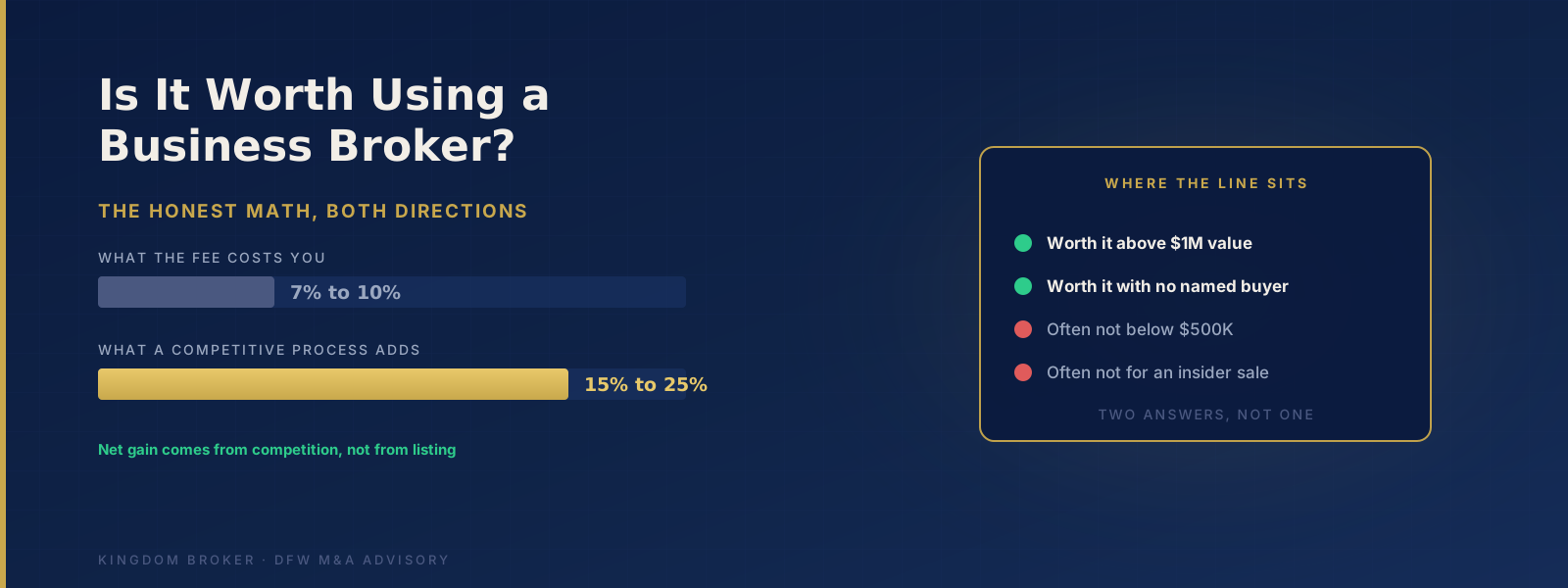
For most businesses worth more than about $1 million, yes. A properly run competitive process typically lifts the final price 15% to 25% above what an unrepresented owner negotiates with a single buyer, and that lift is larger than the 7% to 10% success fee costs. Below roughly $500,000 in value, or when you already have a committed buyer at a fair price, the answer flips and a good transaction attorney plus your CPA will serve you better than a broker will.
That is the whole answer. Everything below is the reasoning, including the four situations where I tell owners not to hire me.
Start With the Honest Part: When a Broker Is Not Worth It
Most articles on this question are written by brokers who conclude that you need a broker. So let me go first with the cases where you do not.
1. Your business is worth under about $500,000
Almost every advisor carries a minimum fee, commonly $30,000 to $75,000 depending on the firm. On a $400,000 sale, that minimum is 8% to 18% of your proceeds, and the buyer pool at that size is mostly individuals shopping on public marketplaces who would have found the business anyway. Owners at this level usually do better listing it themselves, hiring a transaction attorney for $5,000 to $12,000 to paper the deal, and having their CPA model the tax outcome. That is a real plan, not a consolation prize.
2. You already have a real buyer at a fair price
A competitor who has been asking for five years. A key employee. A partner. A son or daughter. If someone specific has already said yes near a number you would accept, the main thing a broker adds is competitive tension, and you have chosen to give that up on purpose for reasons that are often good ones, like keeping the team intact or keeping the deal quiet. Pay an attorney and a valuation professional. Do not pay a percentage of the whole deal for a buyer you found yourself. If you do bring in an advisor for a known buyer, negotiate a reduced fee for that specific party and get it in writing before you sign anything.
3. You have done this before and you have the time
If you have bought or sold companies, can read a purchase agreement, know what a working capital peg is, and can give the process 15 hours a week for nine months without your revenue slipping, you can run your own sale. The skill is real and some owners have it. Be honest with yourself about the time, not just the skill. The most common failure mode for experienced owners going solo is not incompetence. It is a business that quietly drifts while the owner is buried in diligence requests.
4. Your business is not sellable yet
If one customer is 40% of revenue, if the books mix personal and business spending in a way nobody can untangle, or if nothing happens without you in the building, going to market now converts a fixable discount into a permanent one. The right move is 12 to 24 months of preparation, and the honest advisor tells you that instead of taking the listing. Our guide on preparing your business for sale lays out the sequence.
The test that cuts through everything: would running a real competitive process plausibly move your price by more than the fee? If the answer is clearly no, do not hire a broker. If you do not know the answer, you need a valuation before you need an advisor.
When a Broker Is Clearly Worth It
The same test points the other direction in four common situations.
You have no buyer identified. This is the big one. Finding qualified buyers is the part owners consistently underestimate. There is a difference between someone who emails about your listing and a private equity platform with committed capital and a mandate in your industry. Screening that gap is most of the work. We cover the mechanics in how to find buyers for your business.
Confidentiality matters. If your technicians learning you are for sale would cost you three of them, you cannot market the business yourself. A broker exists partly as a wall. Buyers talk to the broker under NDA, and your name does not go out until a buyer has cleared screening.
Institutional buyers are in your market. Private equity groups rolling up home services, manufacturing, and healthcare across Texas have deal teams that price businesses for a living. An owner across the table from that team without representation is the least experienced person in the room, and it shows up in the terms more than the price.
You need to keep running the business. A sale process consumes hundreds of hours. Every hour you spend assembling data room files is an hour not spent on the revenue the buyer is underwriting. A dip in your trailing twelve months during diligence is one of the most expensive things that can happen to a deal.
What Exactly Are You Paying For
The fee is not for a listing. Here is the actual scope of work behind it.
- Recasting the financials. Turning your tax returns into adjusted EBITDA a buyer and a lender will both accept, with defensible add backs.
- Pricing and structure. What the business is worth, and how the deal should be built. Remember that FF&E sits inside the EBITDA multiple, while real estate is valued separately, so you should always see your number both with and without the property.
- The CIM. The Confidential Information Memorandum that buyers actually read. Priced standalone, this document runs $10,000 to $25,000.
- Buyer sourcing and screening. A named target list, outreach under NDA, and proof of funds before anyone sees your name.
- Running competing offers. Managing multiple parties toward letters of intent on a timeline so they arrive close together, which is the entire source of the price lift.
- Diligence and closing. Holding the deal together through the sixty to ninety days when most transactions die, working alongside your attorney and CPA.
The Math, Run Honestly
Take a business at $700,000 of adjusted EBITDA in a market where the range is 3.5x to 5x.
| Scenario | Sale price | Advisory cost | Net to owner |
|---|---|---|---|
| Single buyer, unrepresented | $2,450,000 | $15,000 legal | $2,435,000 |
| Three buyers, represented | $3,150,000 | $252,000 at 8% | $2,898,000 |
The gap is $463,000, and it comes entirely from the second buyer and the third. If the process only ever produces one interested party, the represented column collapses and the broker did not earn the fee. That is the honest risk, and it is why the questions in how to find a good business broker in Texas center on buyer access rather than marketing polish.
At an 8% fee, the process has to move your price about 9% to 10% just to break even. Anything above that is yours. Studies of represented versus unrepresented sales consistently show lifts in the 15% to 25% band, but that is an average across many deals, not a promise about yours.
What Moves the Answer for Your Specific Business
Four drivers push you toward or away from hiring someone.
Deal size. Under $500,000 of value the fee math rarely works. From $500,000 to $1 million it is genuinely a judgment call. Above $1 million it usually works, and above $3 million it almost always does because percentage fees fall while the dollars in play rise.
Buyer depth in your industry. If ten institutional acquirers are active in your trade, competition is available and a broker can create it. If your business is unusual enough that there are three plausible buyers in the country, the advisor is worth more for structure and negotiation than for sourcing.
How clean your financials are. Messy books make representation more valuable, because the recasting work is where a large share of the value gets recovered. If your books are already lender ready, you have captured some of that yourself.
Your risk tolerance. A failed self-run sale costs you eight months, a burned relationship with the one buyer who knew, and a market that now knows you tried. That risk is real, and it belongs in the calculation next to the fee.
Frequently Asked Questions
Is it worth using a business broker?
For most businesses worth more than about $1 million, yes. A competitive process typically lifts the final price 15% to 25% above what an unrepresented owner negotiates with a single buyer, which exceeds the 7% to 10% success fee. Below roughly $500,000 in value, or when you already have a committed buyer at a fair price, the fee is harder to justify.
When is it not worth using a business broker?
Four situations. A business valued under about $500,000, where minimum fees eat too much of the proceeds. An already identified buyer such as a competitor, a key employee, or a family member who has agreed to a fair price. An owner with prior transaction experience and the time to run a process. And a business that is not yet sellable, where 12 to 24 months of cleanup will earn far more than going to market today.
What exactly does a business broker do?
A sell-side broker normalizes your financials into adjusted EBITDA, prices the business, writes the CIM, builds a target list of qualified buyers, runs outreach under NDA, screens buyers for real capital, manages competing offers into a letter of intent, then quarterbacks due diligence and closing alongside your attorney and CPA. The confidentiality work matters as much as the marketing, because a leak to employees, customers, or competitors can damage the business and kill the deal.
Do business brokers actually get a higher sale price?
The lift does not come from the listing. It comes from competition. One buyer sets the price. Three qualified buyers discover it. A broker also protects terms that never appear in the headline number, including earnout triggers, working capital targets, escrow size, and seller note structure, any one of which can move your net proceeds by six figures after closing.
How to Decide in the Next Ten Minutes
Get a number first. You cannot evaluate a fee, a broker, or an offer without knowing what the business is worth, and the number changes the answer to this entire question. Our free valuation takes about ten minutes and costs nothing.
Then read two more things. The full comparison in business broker versus selling it yourself walks the tradeoffs deal stage by deal stage, and how much a business broker charges in Texas covers what the fee should look like in writing. If you want the whole shelf, everything we publish for owners lives in the Seller Library.
Kingdom Broker charges a retainer, lower than most brokerages, plus a success fee on a sliding scale of 7 to 10 percent by deal size, and we offer the No-Cost Exit™ option for owners who qualify. We will also tell you when the answer is that you do not need us. Comparing firms is a healthy step, and our guide to the best business brokers in Texas is written to help you do that, along with our city pages for Dallas, Fort Worth, and Houston.
Get the Number Before You Decide
Free, confidential valuation. Ten minutes, no obligation, and you will know whether a competitive process is worth running for your business.
Get Your Free Valuation Questions first? Email Eric@KingdomBroker.com