How to Find a Good Business Broker in Texas
Start with referrals from your CPA and your transaction attorney, cross check those names against the IBBA and M&A Source member directories, then interview at least three firms. The single best predictor of a good outcome is closed deals in your industry and your size range within the last 24 months, verified by calling references the broker did not hand pick for you. Marketing polish, office size, and how many listings a firm shows on its website predict almost nothing about what you will net at closing.
That is the method. Below is how to run it without wasting three months, including the ten questions that reliably separate an advisor from a listing agent, the red flags worth walking away from, and what Texas actually requires.
Where to Actually Look
Four sources, roughly in order of signal quality.
Your CPA and your transaction attorney. These two people watch deals close and fall apart across dozens of local businesses. They know which advisors return calls in month seven when diligence gets ugly. Ask them a specific question: which broker have you seen get a seller a clean close in the last two years. A name they hesitate over is as useful as a name they volunteer.
Trade association directories. The International Business Brokers Association and M&A Source both publish member directories, and the Texas Association of Business Brokers covers this state specifically. Designations like the CBI from IBBA or the M&AMI from M&A Source mean the person completed real coursework and agreed to an ethics standard. They do not guarantee a good process, but they do filter out the part timers.
Owners in your industry who have already sold. The most useful call you can make is to someone who sold a company like yours 18 months ago. Ask what surprised them, what the broker did well, and what they would do differently. Trade groups and supplier reps usually know who those people are.
Search, used carefully. Search results tell you who invests in marketing. That is real information about a firm, but it is not information about outcomes. Use it to build a list, then apply the screens below. Our guide to the best business brokers in Texas is built as a comparison framework, with city breakdowns for Dallas, Houston, and Austin.
Match the Advisor to Your Deal Size
This is the mistake I see most often. The market splits into tiers, and a firm that is excellent in one tier is the wrong choice in another.
| Business value | Right kind of advisor | What they run |
|---|---|---|
| Under $500K | Main street broker | Listing sites, individual buyers |
| $500K to $2M | Experienced business broker | Listings plus a real buyer list |
| $2M to $20M | Lower middle market M&A advisor | Targeted outreach, competing offers |
| Above $20M | Investment bank | Full auction process |
A broker who sells $300,000 restaurants is not the right person for a $6 million manufacturing company, and a boutique bank will not take your $900,000 landscaping business. Ask directly where your deal sits in their book. If you are the largest deal they have ever handled, you will be learning together on your money. If you are the smallest, you will be a junior person's file. For context on the tier most Texas trade businesses fall into, read lower middle market M&A explained.
The Ten Questions
Ask every candidate the same ten questions and write down the answers. The comparison is more revealing than any individual response.
- How many businesses in my industry and size range have you closed in the last 24 months? You want a number and the names of the industries, not a story about a career.
- Who runs my deal day to day? Some firms sell you the founder and staff the work to an analyst. That can be fine. You just need to know before you sign.
- How do you source buyers beyond public listing sites? Listen for a named list, a database, or existing relationships with private equity groups and strategic acquirers. If the whole answer is a listing site plus a mailing, you are paying advisory rates for advertising. What institutional buyers care about is covered in what private equity firms look for.
- What is your listing to close rate? A large share of listed businesses never sell. An honest advisor will quote you a real number and explain what drove the misses.
- What is your fee, what is your retainer, and is the retainer credited at closing? Get it in writing before you sign. See how much a business broker charges in Texas for the ranges you should expect.
- How long is the exclusivity period, and what is the tail? Twelve months exclusive is standard. A tail of 12 to 24 months, meaning the broker still earns a fee if you close later with a buyer they introduced, is also standard. A tail that covers any buyer from any source is not.
- How do you protect confidentiality? You want a specific process: blind profiles, NDAs before your name goes out, buyer screening before financials move, and a controlled data room.
- What do you think my business is worth, and how did you get there? The method matters more than the number. Be careful with the advisor who quotes the highest value in the room. Overpricing a business burns your best buyers in the first sixty days.
- What could kill this deal? A good advisor answers this immediately and specifically: customer concentration, owner dependence, a lease, a license, deferred maintenance in the books. Vague reassurance here is the single clearest tell in the whole interview.
- May I call two of your last five sellers? Not two references from the wall. The last five. Then actually call them.
The one question behind all ten: is this person going to create competition for my business, or list it and wait? Everything you are paying for lives in the difference. That is also the honest test in is it worth using a business broker.
Red Flags Worth Walking Away From
- A valuation far above everyone else's, delivered fast. Buying the listing with a high number is an old practice. The price gets cut ninety days later, after the strongest buyers have already passed.
- A large non refundable retainer with no deliverables named. Retainers are legitimate. A retainer with no defined work product attached to it is not.
- Pressure to sign at the first meeting. This is a nine month relationship and a life changing transaction. Anyone rushing that signature is telling you something.
- No written marketing plan. Ask for the plan and the timeline in writing. If it does not exist on paper, it usually does not exist.
- Dual representation without disclosure. If the advisor is also being paid by the buyer, you need to know that in writing before anything else happens. One side per deal is the clean standard.
- Vagueness about closings. Any advisor can talk about the market. Only a working one can tell you what closed last quarter.
Does Texas Require a Business Broker License?
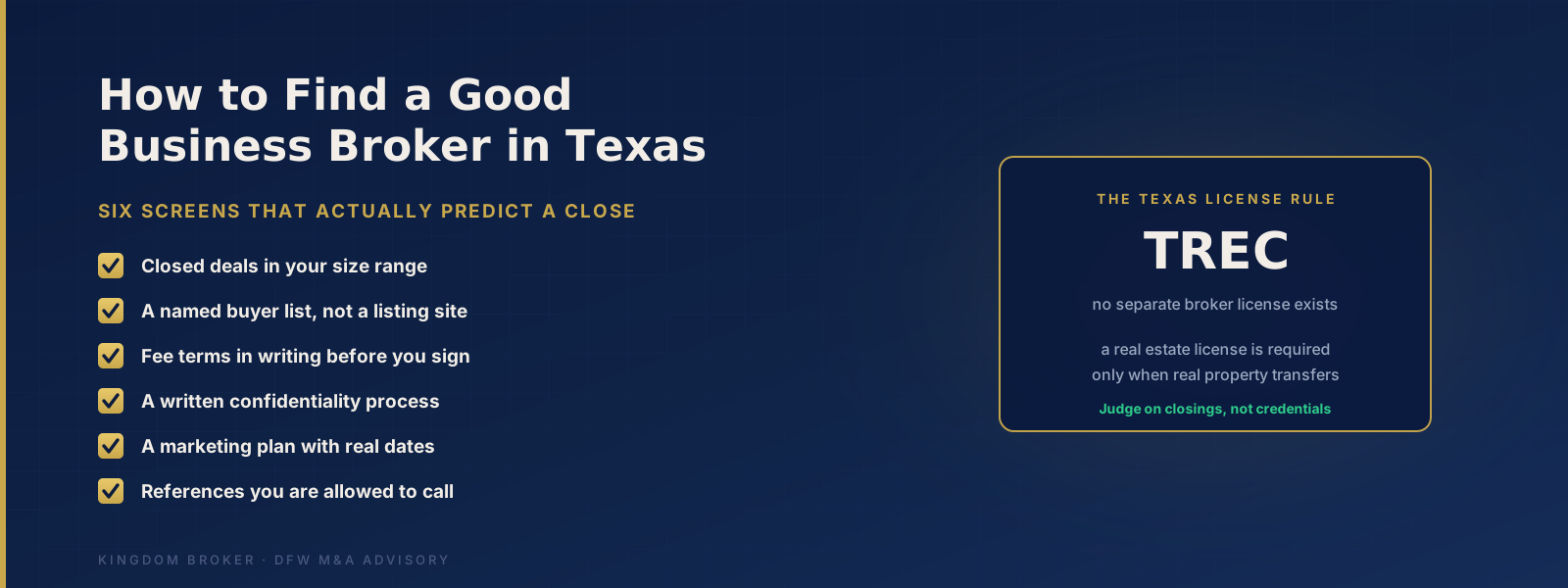
Texas does not issue a separate business broker license. If your transaction includes the transfer of real property, the person handling that portion must hold a Texas Real Estate Commission license. A sale of business assets or stock by itself generally does not require one, and if securities are involved there can be separate federal and state requirements. Confirm the specifics of your deal with your transaction attorney rather than relying on any broker's summary, including this one.
The practical takeaway is that credentials in this industry are thinner than most sellers assume, which is exactly why the closed deal question does more work than any license check. This also matters for your own structure, because whether you sell assets or stock changes both the licensing question and your tax bill. Start with asset sale versus stock sale.
How to Run the Comparison
Week one, gather names from your CPA, your attorney, association directories, and search. Week two, hold three interviews using the same ten questions. Week three, call references and read all three agreements side by side with your attorney before you sign anything.
Score each firm on six things: closings in your size range, buyer sourcing beyond listing sites, fee terms in writing, a documented confidentiality process, a written marketing plan with dates, and references you are free to call. Then read the agreements together. Exclusivity length, tail scope, retainer credit, and termination rights vary far more between firms than headline fee percentages do, and they are where sellers get hurt.
One more thing that costs you nothing. Get an independent valuation before the interviews, so you walk into every meeting already knowing roughly what your business is worth. It changes the conversation completely, and it makes the ninth question, the one about what could kill the deal, much easier to evaluate.
Frequently Asked Questions
How do I find a good business broker?
Start with referrals from your CPA and your transaction attorney, cross check against the IBBA and M&A Source member directories and the Texas association, then interview at least three firms. The best predictor is closed deals in your industry and size range in the last 24 months, verified by calling two references the broker did not hand pick.
How to pick a business broker
Score every candidate on six things: closings in your size range, a named buyer list rather than reliance on public listing sites, fee terms in writing before you sign, a documented confidentiality process, a written marketing plan with a timeline, and references you are free to call. Then weigh the agreement itself, specifically the exclusivity term, the tail period, and how the retainer is credited at closing.
Does Texas require a business broker license?
Texas does not issue a separate business broker license. A Texas Real Estate Commission license is required for the person handling real property when real estate transfers as part of the deal. An asset or stock sale alone generally does not require one, and securities can trigger separate requirements. Confirm with your transaction attorney.
What questions should I ask a business broker before signing?
Closings in your industry and size range over 24 months, who runs the deal day to day, how buyers are sourced beyond listing sites, listing to close rate, fee and retainer terms in writing, exclusivity length and tail, the confidentiality process, their valuation and its method, what could kill the deal, and permission to call two of their last five sellers.
Your Next Step
Do the valuation first, then the interviews. Our free valuation takes about ten minutes and gives you a defensible range to carry into every meeting, including meetings with firms that are not us.
Kingdom Broker charges a retainer, lower than most brokerages, plus a success fee on a sliding scale of 7 to 10 percent by deal size, and we offer the No-Cost Exit™ option for owners who qualify. We will answer all ten questions above in writing, and we will tell you when your business is not ready. Everything else we publish for owners is in the Seller Library.
Walk Into Every Broker Meeting Knowing Your Number
Free, confidential valuation in about ten minutes. Use it to evaluate any advisor in Texas, including ours.
Get Your Free Valuation Questions first? Email Eric@KingdomBroker.com