Best Business Broker for HVAC Companies in DFW
You've spent years building your HVAC company. Techs trained. Trucks running. Customers renewing maintenance agreements like clockwork. You've done the hard part.
Now you're thinking about selling, and the broker you choose will either protect everything you built or quietly leave money on the table.
In the DFW market, that gap can be $500,000 or more on a mid-size residential and commercial HVAC company. So let's talk about what actually separates a great HVAC business broker from a mediocre one.
Why General Business Brokers Often Miss on HVAC Deals
Most business brokers in Texas are generalists. They'll sell a pizza franchise one month and a landscaping company the next. That's fine for some industries. It's a real problem for HVAC.
HVAC companies have a specific financial fingerprint. Seasonal revenue swings. Maintenance agreement recurring revenue that buyers love but don't always know how to value properly. Owner technician dependency that can crater a deal if it's not positioned right. Equipment and fleet depreciation schedules that affect adjusted EBITDA. Licensing requirements tied to the owner's name.
A generalist broker may not even know what a service agreement renewal rate is, let alone how to use it to justify a higher multiple to a private equity-backed buyer. A specialist knows that a DFW HVAC company with 60% recurring revenue and clean technician staffing can command a different conversation entirely.
This is why industry experience isn't a nice-to-have. It's the thing that determines whether your deal closes at 4x EBITDA or 3x.
What the Best HVAC Business Broker in DFW Actually Does
They Know the Buyer Universe
DFW has become one of the most active markets in the country for HVAC acquisitions. Private equity-backed platforms are actively rolling up regional operators. Strategic acquirers from Houston, Phoenix, and Atlanta are looking north. Owner-operators with SBA financing want to step into an established book of business.
The right broker isn't posting your listing on BizBuySell and waiting. They're calling buyers they already have relationships with. They know which PE firms are currently deploying capital in home services. They know which strategic buyers will pay a premium for your maintenance agreement base. That network is worth real money to you.
If a broker can't name three or four active HVAC acquirers in Texas off the top of their head, that's a signal. Learn more about what private equity firms look for so you can evaluate whether your broker is speaking that language.
They Prepare You Before the Market
The best HVAC brokers spend real time on pre-market preparation. That means cleaning up your financials, identifying add-backs, and addressing any issues that would show up in due diligence before a buyer sees them.
Think about it from the buyer's side. They're paying $3M to $8M for your company. They're going to look at everything. If your books show owner personal expenses mixed into operating costs and nobody has normalized them, that's a problem. If your revenue is 80% tied to two commercial contracts, that's a problem that needs a story before it hits the buyer's desk.
A great broker helps you understand what add-backs are and how to document them. They walk you through the preparation process methodically. They aren't rushing you to market before you're ready because they want a commission check this quarter.
They Give You Real Numbers: Not Flattery
Here's an uncomfortable truth. Some brokers will tell you your company is worth more than it is just to win the listing. You sign an agreement, you go to market at an inflated price, you get no offers, and six months later they're asking you to drop the price. Your business has now sat on the market publicly, and serious buyers are wondering what's wrong with it.
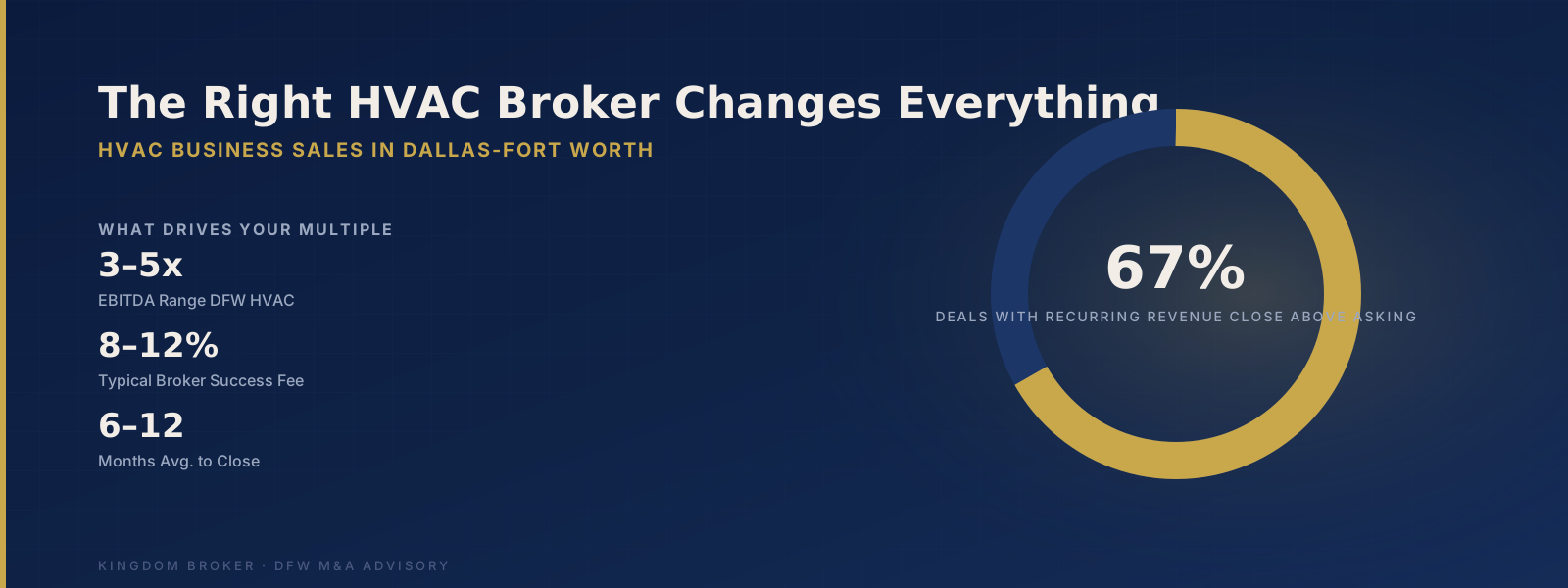
The best broker tells you the truth on day one. DFW HVAC companies typically trade in the 3x to 5x EBITDA range depending on size, recurring revenue, owner dependency, and growth trajectory. A $1.5M EBITDA company with strong service agreements and a solid management team might get to the higher end of that range. A $600K SDE company where the owner is also the lead technician is probably closer to the lower end.
You want a broker who gives you that honest range, and then shows you specifically what moves the needle.
They Understand DFW Market Dynamics
The DFW Metroplex isn't a monolith. A residential HVAC company dominant in Frisco or McKinney has a different buyer profile than a commercial shop serving industrial clients in Garland or Grand Prairie. The broker should understand local market saturation, geographic buyer preferences, and how North Texas population growth affects strategic value.
DFW added over 150,000 new residents last year. Buyers know that. They're paying for growth runways, not just historical earnings. Your broker should be making that case fluently.
Fee Structures: What's Normal, What's a Red Flag
Most reputable HVAC business brokers in Texas work on a success fee, typically 8% to 12% of the transaction value for deals under $5M, with fees stepping down on larger transactions. Some charge an upfront engagement retainer, especially for more complex deals that require significant preparation work. That's not inherently a red flag.
What is a red flag: a broker charging a large upfront fee with no clear deliverables, or one who won't share their specific buyer list methodology, or someone who pressures you to sign a long exclusive agreement before explaining their process.
Also: if a broker doesn't mention the quality of earnings process for larger deals, they may not have experience with the buyers who require it. PE-backed buyers on transactions above $3M almost always want a QofE. Your broker should be preparing you for that conversation, not surprised by it.
For full context on broker fees and what you actually get, see our breakdown of how much a business broker charges in Texas.
Red Flags to Avoid When Choosing an HVAC Broker
Watch out for these specific warning signs.
- No verifiable HVAC or home services deal history in Texas
- Can't articulate the difference between SDE and EBITDA, and why it matters for your deal size
- Lists every business publicly on aggregator sites without a confidential marketing process
- Doesn't ask about your maintenance agreement base in the first meeting
- Pushes you toward seller financing as the primary structure without explaining the implications
- Has never worked with a PE platform buyer or doesn't know who the active HVAC rollup operators are in the Sunbelt
Owner dependency is one of the most common deal-killers in HVAC transactions. If your broker doesn't bring it up early, read our piece on how owner dependency kills business value, and then ask your broker directly how they plan to address it.
The Kingdom Broker Difference in DFW HVAC
Kingdom Broker works exclusively in the DFW lower-middle market: $1M to $20M companies in home and commercial services. HVAC is a core vertical. We know the buyers. We know what they're paying right now. We know the difference between a deal that closes at 4.5x and one that falls apart in due diligence.
We're not a national franchise shop matching sellers to generic buyers. We're a DFW-specific advisory firm that has sat across the table from PE-backed acquirers, strategic buyers, and owner-operators writing SBA checks, and we know how to position your company for all three.
If you're thinking about selling your HVAC company in the next 12 to 24 months, the best first step isn't choosing a broker. It's understanding what your business is actually worth. That number shapes every decision after it.
Find Out What Your HVAC Company Is Worth
Get a straight-talk valuation built for DFW HVAC companies, no fluff, no inflated numbers, just what buyers are actually paying right now.
Get Your Free Valuation