What Buyers Actually Want in a DFW HVAC Acquisition
If you've owned an HVAC business in Dallas-Fort Worth for ten or fifteen years, you probably know your equipment, your crews, and your customers better than almost anyone.
What you may not know is who's going to buy your company, and what they actually care about when they write a check.
That gap costs sellers real money. The owner who understands buyers positions his business to attract the right one and commands the highest multiple. The owner who doesn't ends up wondering why his deal fell apart at due diligence or why the letter of intent came in lower than he expected.
Let's fix that.
Three Types of Buyers Chasing DFW HVAC Right Now
The DFW market is one of the hottest HVAC acquisition targets in the country. Population growth, new construction, and the brutal Texas heat create a demand floor that buyers can underwrite with confidence. That means you have real options, but those options are not interchangeable.
Private Equity Platforms
PE groups, usually operating through a portfolio company they've already acquired, are the most aggressive buyers in the market right now. They're not buying your business because they love HVAC. They're buying it because they're building scale. Your $3M EBITDA company becomes one piece of a $25M EBITDA platform they'll sell to a larger fund in four to seven years.
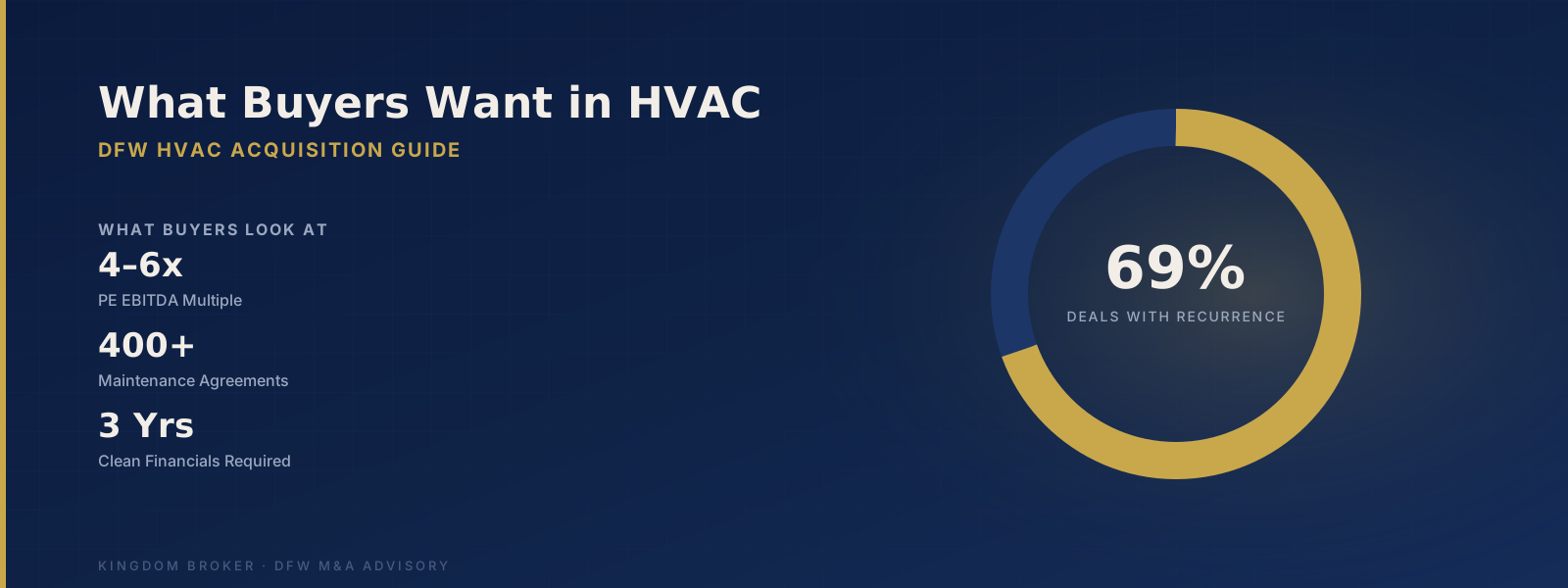
What PE wants above almost everything else is recurring revenue. Maintenance agreements. Service contracts. Customers who pay every year whether the system breaks or not. A DFW HVAC company with 400 active maintenance agreements is worth meaningfully more to a PE buyer than a company doing the same revenue purely on install and emergency call work.
PE also wants management that stays. If you are the business, the one everyone calls, the one who closes every big commercial bid: PE will price that risk into their offer. Hard. Learn why that matters at our owner dependency post.
Typical PE multiple range for a qualifying DFW HVAC business: 4x to 6x EBITDA. The spread is wide because recurrence, management depth, and geographic density matter enormously to where you land.
Search Fund Buyers (ETA)
Entrepreneurship Through Acquisition, search funders, are individuals, often with an MBA or operator background, who raise capital specifically to buy and run one business. They want to be the CEO. They want to build something. And increasingly, they are targeting home services businesses in growing metros like DFW.
Search funders are a great fit for sellers who want to step back but want someone to genuinely care about the legacy they've built. These buyers are buying a job and a future, not just a cash flow stream.
What search funders want: a business with systems, a loyal team, and a seller who will stick around for a real transition. They don't need you to have a million contracts. They need the business to be learnable and to have a clear lane for growth.
Multiple range: 3.5x to 5x EBITDA. Deal structure often includes seller financing or an earnout, which can actually work in your favor if you believe in where the business is heading. More on that at our seller financing guide.
Strategic Buyers
A strategic buyer is usually another HVAC company, or a broader home services operator, who wants to acquire your customer base, your territory, your trucks, or your people. They're not buying a financial model. They're buying capability.
Strategics can pay the highest multiples when there's genuine synergy. If a Fort Worth HVAC company wants to expand into Collin County and you have 600 residential customers in McKinney, that's a motivated buyer with a specific reason to pay up.
But strategics can also be the lowest-multiple buyers if there's no strategic logic, if they're just opportunistically shopping. Know the difference before you sit down with one. Our post on what private equity looks for also helps you compare the mindsets side by side.
Strategic multiple range: 3x to 7x EBITDA, the widest range of any buyer type, entirely dependent on fit.
The Four Things Every Buyer Checks First
Regardless of buyer type, there's a short list of things every sophisticated acquirer examines before they get serious. These aren't negotiable. They're table stakes.
1. Clean, Documented Financials
Three years of P&Ls, tax returns that reconcile, and an honest accounting of add-backs. Buyers have seen every creative arrangement. They're not going to let unclear numbers slide, they'll either reprice or walk. A Quality of Earnings report done before you go to market puts you in control of the narrative. Read more in our QoE guide for DFW owners.
2. Customer Concentration
If one commercial client drives 30% of your revenue, every buyer's attorney is going to flag it. Not because it's necessarily fatal, but because it's risk they have to price. Diversified residential books, spread across zip codes in DFW's growth corridors, underwrite cleanly. Heavy single-client exposure requires explanation. See our full breakdown at customer concentration risk.
3. Recurring Revenue Percentage
Say it again because it bears repeating: maintenance agreements are currency in HVAC acquisitions. Buyers will often pay a premium multiple specifically on the recurring revenue portion of your business. If your maintenance book is thin, start building it twelve to eighteen months before you go to market. It changes your valuation more than almost anything else you can do.
4. Technician Retention and Bench Depth
DFW has a skilled labor shortage that every buyer knows about. If you have five technicians who've been with you for six or more years, that is a genuine asset. If you're constantly hiring and losing people, buyers assume the problem follows the business, not just the current owner.
What Kills DFW HVAC Deals After LOI
Most deals that die, die in due diligence. Not because the business was bad, because the seller wasn't prepared for the scrutiny.
The common killers: unreported liabilities, equipment that's older than disclosed, licensing issues (Texas HVAC licensing requirements are strict and buyers check), and revenue that turns out to be less recurring than represented. Preparation matters more than price. Our due diligence checklist walks you through exactly what buyers will request.
Matching Your Business to the Right Buyer
This is the real work of a good M&A advisor. It's not just running a process and collecting offers. It's knowing which buyer type fits your business profile, your goals, and your timeline, and then positioning your company to look like exactly what that buyer is hunting for.
A $4M revenue residential HVAC company in Frisco with strong maintenance agreements and a solid ops manager is a PE add-on candidate. That same business with no maintenance contracts and an owner who runs every crew is a search funder deal, at a lower number.
The positioning changes the outcome. The preparation changes the number.
If you want to know where your business stands right now, what buyer type fits, what multiple is realistic, and what's holding your valuation back, start with a free HVAC business valuation. It takes ten minutes and gives you a real benchmark, not a guess.
Find Out What Your HVAC Business Is Worth to Each Buyer Type
Our free valuation tool gives DFW HVAC owners a realistic multiple range in about ten minutes, no obligation, no sales call required unless you want one.
Get Your Free Valuation