Should I Sell My Roofing Business Before Hail Season?
Every roofing owner in DFW asks some version of this question eventually.
Hail season is coming. The phone is about to blow up. Revenue is about to spike. And somewhere in the back of your mind, you're wondering, should I sell now, before the chaos starts, or wait until I'm sitting on a monster year?
It's a fair question. And the answer is more nuanced than you'd expect.
Let's walk through it honestly.
What Hail Season Actually Does to Your Financials
North Texas gets hammered. Dallas, Fort Worth, Frisco, McKinney, if you've been in this business more than a few years, you've had a storm-year that doubled your revenue almost overnight. Maybe it was that April system that tore through Collin County. Maybe it was a summer storm that lit up your service area for three straight months.
Storm years feel like a gift. And they are, operationally. But when it comes to selling, they create a puzzle.
Buyers and their lenders don't value one-time revenue spikes the same way they value consistent, recurring revenue. A buyer paying 4x or 5x your EBITDA wants to believe that EBITDA will still be there after the deal closes. If your best year was driven by a hailstorm that may not happen again for seven years, they're going to discount it, sometimes heavily.
That's not a knock on your business. It's just how math works in a sale process.
The Three Windows Every DFW Roofing Owner Faces
Window One: Before Hail Season Hits
Listing in January through March, before storm season cranks up, gives you a clean trailing twelve months of normalized revenue. If the last year or two was solid but not storm-inflated, this is often your best window.
Buyers can underwrite the numbers without squinting. SBA lenders can approve financing without trying to figure out what "adjusted for storm activity" really means. And you get to close before the operational grind of a big season distracts you from due diligence.
One more thing: selling before a big hail season means you might leave some money on the table, but you also avoid the exhaustion that follows a storm year. Most owners who try to sell after a massive year are burned out, understaffed, and dealing with warranty callbacks. That's not a clean exit.
Window Two: Right After a Strong Storm Year
If you just came off a record year, real revenue, documented jobs, strong collections, there's an argument for striking while the iron is hot.
Here's the honest truth though: buyers will normalize your numbers. A quality of earnings report (learn more about what that process looks like at our QoE breakdown for DFW businesses) will separate your storm-driven revenue from your base business. If your base is strong, that's a great story. If storm revenue was masking weak recurring performance, it'll show up.
Sophisticated buyers, especially private equity groups rolling up roofing companies across Texas, are very good at this analysis. Don't expect them to pay a full multiple on a number they believe is an anomaly.
Window Three: Mid-Season or After a Bad Year
This is the hardest window to sell in. Active storm season means you're too busy to run a sale process well. A bad revenue year makes your trailing numbers look weak, even if it was just circumstance.
If you're here, the move is usually to wait, use the next 12 to 18 months to build the story, clean up your financials, and reduce the owner dependency that kills deals. Owner dependency is one of the biggest value killers in any home services business, and roofing is no exception.
What Buyers Are Actually Paying For in a Roofing Business
Before you fixate on timing, understand what drives value in the first place.
Buyers, whether that's a local operator, a private equity-backed platform, or a strategic acquirer, are paying for earnings that will continue after you leave. That means they're looking hard at a few things.
- What percentage of revenue is recurring maintenance or commercial contracts vs. one-time storm replacement?
- Is there a real operations team, or does everything run through you?
- How concentrated is the customer base? If 40% of revenue comes from one insurance adjuster relationship, that's a risk. Customer concentration matters more than most owners realize.
- What do the last 3 years of financials actually show, and how clean are the books?
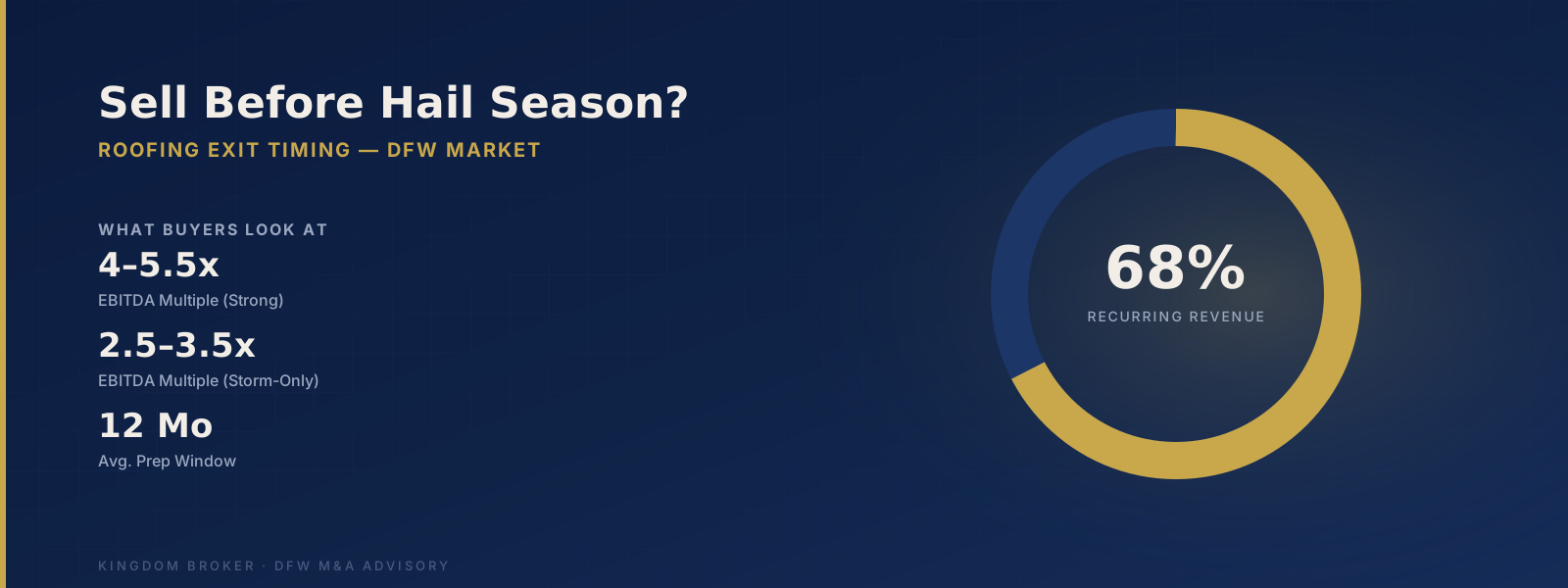
A roofing business with $2M in EBITDA, solid recurring revenue, and a real team might trade at 4x to 5.5x. That same business in a storm-inflated year with no recurring revenue and an owner who runs every job might get 2.5x to 3.5x, if it sells at all.
The gap is real. And it's worth understanding before you pick your timing.
The DFW Market Factor
There's a reason North Texas roofing businesses are in high demand right now. Population growth, commercial construction, and yes, consistent storm activity, make DFW one of the most attractive roofing markets in the country.
Private equity has noticed. Platforms are actively acquiring roofing companies from Fort Worth to Rockwall. If you've been thinking about selling your roofing business, the buyer pool is deeper than it's been in years. We've written a full guide on selling a roofing business in DFW if you want the broader picture.
That demand doesn't disappear because of storm season timing. But the right buyer and the right multiple are easier to achieve when your financials tell a clear, believable story.
What Actually Makes the Difference
Here's the thing owners miss: timing matters less than preparation.
A well-prepared roofing business, clean financials, documented processes, real management depth, defensible add-backs, will sell for more and sell faster regardless of where hail season falls on the calendar. A messy business with inflated storm revenue and zero recurring contracts will struggle to close no matter when you list it.
If you want to understand what your business is actually worth right now, not what you hope it's worth, the first step is getting a real valuation. Not a back-of-napkin multiple. A valuation that accounts for your revenue mix, your team, your customer base, and how a buyer's lender will look at your numbers.
The best time to start that conversation is before hail season, not after you're drowning in jobs and too tired to think straight.
Understanding your add-backs is also part of this equation. Add-backs can significantly change your effective EBITDA, and a good advisor will help you document them correctly before you go to market.
Whether you're planning to sell in six months or three years, knowing your number changes everything. Get your free roofing business valuation here and we'll give you a straight answer, no fluff, no pressure.
Find Out What Your Roofing Business Is Actually Worth
Get a real valuation, not a guess, before hail season changes the story. We'll give you straight numbers and honest advice, no strings attached.
Get Your Free Valuation