HVAC Commercial vs Residential: Which Sells for More?
If you own an HVAC company in DFW and you're thinking about selling, one question comes up fast: does it matter whether you do commercial work, residential work, or both?
The short answer is yes. It matters a lot.
Commercial HVAC businesses typically sell at higher EBITDA multiples than residential-only shops. That's the general rule. But the full picture is more nuanced, and understanding the nuance could add six figures to your exit number.
Why Buyers Pay More for Commercial HVAC
Buyers aren't paying for what your business does today. They're paying for what it will reliably produce tomorrow, next year, and the year after that.
Commercial HVAC delivers predictability in a way residential rarely does.
Think about it from the buyer's perspective. A commercial HVAC company with 40 active maintenance contracts covering office buildings, restaurants, and retail centers in the Metroplex is generating recurring, contracted revenue. Tenant turnover doesn't kill those contracts. One cold snap doesn't make or break the quarter. There's a service manager, dispatch, and a small office staff, which means the business runs whether or not the owner is on a job site.
That's exactly what private equity firms and strategic buyers are hunting for. Recurring revenue. Transferable customer relationships. A team that doesn't evaporate when the founder leaves.
Residential HVAC, by contrast, is heavily transactional. A homeowner calls because their unit failed in August. You fix it. They move on. They might call again, but they might also go with whoever runs the best Google ad next summer. That churn risk gets priced into the multiple.
The Numbers: What Are Buyers Actually Paying?
Let's be honest about where the market sits right now in Texas.
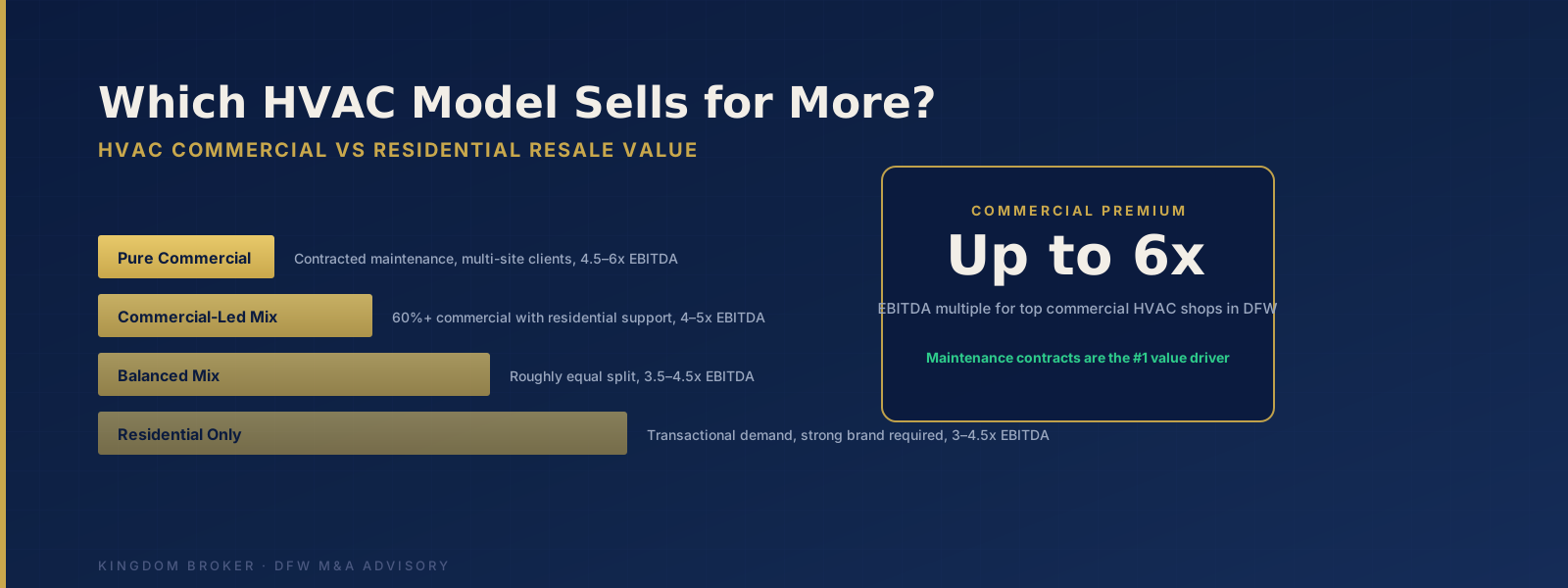
A strong commercial HVAC company: $3M to $8M in revenue, 15% or better EBITDA margins, meaningful maintenance contract revenue, and a management team in place, can realistically trade at 4.5x to 6x EBITDA in the current DFW market. Larger platforms with $10M+ in revenue and clean financials have pushed past 6x when the right strategic buyer is in the room.
A solid residential HVAC business with good reviews, a recognizable brand in a specific suburb, and decent technician retention typically trades at 3x to 4.5x EBITDA. Good business. Real value. But the ceiling is lower.
A mixed shop, maybe 60% residential, 40% commercial service agreements, often lands somewhere in between, depending on how the financials break out and whether the commercial side is documented cleanly.
For context on how those numbers get calculated, our HVAC business valuation guide walks through exactly how buyers apply multiples to your adjusted earnings.
What Specifically Drives the Commercial Premium
Maintenance Contracts
This is the single biggest value driver in commercial HVAC. If your company has signed maintenance agreements covering rooftop units, chillers, or split systems across a portfolio of commercial properties, buyers will pay for that contracted revenue stream. It's predictable. It's sticky. It often includes parts markups. And it creates a built-in reason for customers to call you first when something breaks, which feeds high-margin repair revenue on top of the contract base.
Lower Owner Dependency
Commercial HVAC companies tend to be less owner-dependent than residential shops. The owner of a residential shop is often the best technician, the estimator, the customer-relationship hub, and the one who handles all the emergency callbacks. Pull that person out and the business wobbles. Owner dependency is one of the most consistent value killers we see, and residential HVAC is especially vulnerable to it.
Customer Concentration Risk
This one can cut both ways. Commercial HVAC companies sometimes have heavy concentration in a handful of property management groups or a single big retail chain. If one client represents 30% or more of your revenue, that's a problem for buyers, and it will show up in the multiple. Customer concentration risk is one of the first things a buyer's due diligence team will scrutinize. Clean commercial books with 15 or more distinct commercial clients are far more attractive than a residential company with 2,000 homeowner names who called once.
Technician Certification and Licensing
Commercial work often requires more advanced certifications, universal EPA 608, specific chiller training, building automation experience. That creates a barrier to entry that buyers value. It's harder to replicate a commercial HVAC bench than a residential one. If your team has it, that's a moat.
When a Mixed Shop Actually Wins
Here's where it gets interesting for a lot of DFW owners.
A purely residential company with strong brand recognition in a specific corridor, say, Southlake, Keller, or Frisco, and a solid Google reputation can be extremely attractive to a regional rollup platform that's specifically buying residential service companies in high-income suburbs. The demographics matter. Household income matters. Average ticket matters.
And a mixed shop that's done the work to prepare its financials properly, separating commercial and residential revenue, showing gross margin by division, demonstrating that the commercial maintenance base is under contract, can sometimes outperform a pure commercial company that has messy books and undocumented add-backs.
Speaking of add-backs: make sure you understand what qualifies as a legitimate add-back before you walk into any buyer conversation. Residential shops in particular often have significant owner perks running through the business that need to be normalized properly.
The mix itself isn't the whole story. The story is in the quality of your revenue, the documentation of your contracts, and whether a buyer can clearly see a business that will keep running after you hand over the keys.
DFW-Specific Reality Check
The Dallas-Fort Worth market is one of the most active HVAC M&A markets in the country right now. The population growth alone, north DFW has added hundreds of thousands of residents in the last decade, means both residential and commercial demand keeps climbing. Buyers know this. They're paying for that tailwind.
But there's also a lot of competition for quality deals. Private equity-backed platforms that already own HVAC companies in the Metroplex are looking for bolt-on acquisitions. They know what good looks like. They're not going to overpay for a residential shop with a retiring owner, three techs, and no real systems. They will pay fair value, sometimes great value, for a company that has put in the work.
If you're running commercial service agreements, document them. Make sure they're assignable. Have your attorney confirm that your contracts transfer cleanly at sale. This is one of the most common last-minute deal complications we see, and it's entirely avoidable.
So Which Should You Build Toward Before You Sell?
If you have two to three years before you want to exit, the answer is almost always: grow the commercial maintenance base. Even adding 10 to 15 solid commercial maintenance contracts in the next 24 months can meaningfully shift your multiple at sale, because you're not just adding revenue, you're adding recurring, contracted, predictable revenue that a buyer can underwrite with confidence.
If you're 12 months or less from selling, focus on documentation and presentation. You're not going to transform your business mix in a year. But you can clean up your financials, quantify every dollar of add-backs, and make sure your maintenance agreements are in writing and assignable.
Either way, the starting point is knowing where you stand today. What's your current EBITDA? What multiple is realistic for your mix? What gaps exist between where you are and where you want to be at closing?
Find Out What Your HVAC Business Is Worth
Commercial, residential, or mixed, get a straight answer on your multiple. Our free valuation tool gives you a realistic range based on DFW market data.
Get Your Free Valuation