How to Sell an HVAC Business in Dallas
Dallas is one of the hottest markets in the country for HVAC acquisitions right now. Private equity is here. Regional consolidators are here. And owner-operators with SBA financing are lined up, checkbooks ready.
If you built a solid HVAC company in Dallas, residential service, light commercial, or a mix, you have leverage. The question is whether you know how to use it.
This is the playbook. Real numbers. Real deal structure. Real timeline. No sugarcoating.
What Dallas HVAC Businesses Are Actually Selling For
Let's start with multiples, because that's what every owner wants to know first.
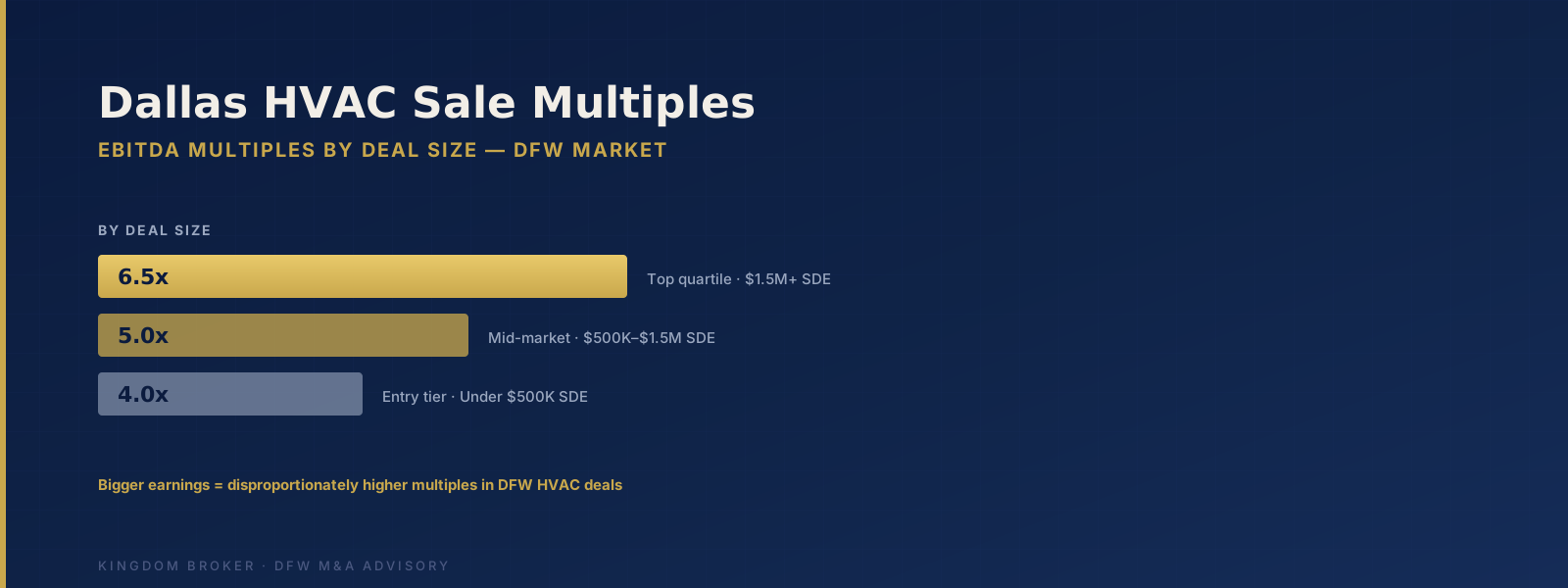
In the current Dallas-Fort Worth market, HVAC businesses typically sell for 3.5x to 5.5x Seller's Discretionary Earnings (SDE) or 4x to 7x EBITDA, depending on size, margin, and how clean the business looks to a buyer.
Here's how that breaks down by tier:
- Under $500K SDE: 3.5x-4.5x, owner-operator buyers, mostly SBA-financed
- $500K-$1.5M SDE: 4x-5.5x, search funds, regional PE platforms, strategic buyers
- $1.5M+ SDE: 5x-7x+, institutional PE, larger platform consolidators
The gap between 3.5x and 6x isn't random. It's driven by a handful of factors that sophisticated buyers underwrite in every deal. More on that in a moment.
For context: a Dallas HVAC company doing $4M in revenue with $800K in owner earnings, after proper add-backs, is realistically a $3.5M-$4.5M business at today's multiples. That's a real number. Don't let anyone tell you otherwise without showing their math.
Why Dallas Is a Strong Market to Sell Into Right Now
Geography matters in M&A. And Dallas is exceptional for a few reasons that go beyond just "the market is hot."
First, population growth. The DFW Metroplex added over 170,000 residents last year. New rooftops mean new systems, new service agreements, and new maintenance contracts, the exact thing buyers are paying a premium to acquire.
Second, heat. Texas summers are not a suggestion. The demand for HVAC service here is non-negotiable. Buyers from outside Texas understand this, and they price it in.
Third, consolidation is accelerating. There are more than a dozen PE-backed HVAC platforms actively looking to acquire in DFW right now. When multiple qualified buyers want your business, you have pricing power.
If you've been thinking about the right time to sell, that window is open right now. It won't be open forever.
What Buyers Are Actually Looking For
Understanding buyer psychology is half the battle. Here's what moves the needle.
Recurring Revenue
Maintenance agreements are gold. A book of 300-500 active service contracts in Dallas transforms your business from a revenue-lumpy contractor into a predictable cash flow machine. Buyers pay more for predictability. Every time.
Systems That Don't Depend on You
If your technicians can't run a job without calling you, buyers will discount accordingly. Owner dependency is one of the single biggest value killers in lower-middle-market HVAC deals. A strong field supervisor, a dispatcher who owns the schedule, and documented SOPs will add six figures to your final number.
Clean Financials
Three years of tax returns that match your P&L. Revenue and margin trends that are flat or improving. No customer that represents more than 15-20% of your revenue. Buyers will scrutinize every line. If you're planning to sell in the next 12-24 months, start cleaning the books now.
Speaking of scrutiny, the Quality of Earnings report has become standard in deals above $1M. Know what it involves before buyers ask for one.
Customer Concentration
This one catches Dallas HVAC owners off guard. If 40% of your revenue comes from one apartment complex or one property management group, buyers will either reprice or walk. Customer concentration risk is real and it hits valuation hard.
Who Is Buying Dallas HVAC Companies Right Now
There are three primary buyer types in today's market. Each has different motivations, different deal structures, and different timelines.
Private Equity and PE-Backed Platforms
These are institutional or semi-institutional buyers who already own one or more HVAC companies and want to bolt yours on. They move fast, pay well for the right business, and almost always require a management team that stays through transition. They're not buying a job, they're buying a platform. If you want to understand what PE buyers underwrite, that's a must-read before your first conversation.
Strategic / Operator Buyers
These are other HVAC operators, sometimes from outside DFW, who want your routes, your technicians, or your brand in a new market. They often pay competitive multiples and can close faster because they already understand the business. Less diligence friction, but sometimes less capital than PE.
Owner-Operator Buyers (SBA-Financed)
Individual buyers using SBA 7(a) loans to purchase their first or second HVAC business. They're highly qualified and motivated, but they top out around $3M-$4M in deal size. If your business is under $1M SDE, this is your most likely buyer pool. Understanding how SBA financing works in Texas will help you structure a deal they can actually close.
Deal Structure: What to Expect
Most Dallas HVAC deals are not all-cash-at-close. Here's what the structure typically looks like.
A PE or strategic deal might be 70-80% cash at close, with 10-15% in a seller note and another 5-15% in an earnout tied to post-close performance. If you're selling to an SBA buyer, the structure is cleaner, usually 80-90% from the loan and 10% seller carry required by SBA guidelines.
Seller financing is common and not something to fear. A well-structured seller note at 6-8% interest, secured against the business, is often better than taking a lower headline price all-cash. The math usually favors it.
Don't let anyone structure a deal without thinking through the tax implications. Asset sale vs. stock sale. Installment sale treatment on your note. Capital gains vs. ordinary income on different pieces. Get your CPA and your M&A advisor aligned before you sign a letter of intent.
The Timeline: From Decision to Closing Table
Dallas HVAC deals typically take 6-9 months from the moment you engage an advisor to the day you wire your proceeds. Here's the rough breakdown:
- Month 1-2: Valuation, financials prep, Confidential Information Memorandum (CIM)
- Month 2-4: Buyer outreach, NDAs, management meetings, Letters of Intent
- Month 4-6: Due diligence, Quality of Earnings, lender underwriting
- Month 6-9: Purchase agreement negotiation, final closing conditions, wire
The biggest delays? Incomplete financials at the start and surprises during due diligence. Both are preventable. Owners who spend 30-60 days preparing before going to market close faster and for more money. No exceptions.
How to Maximize Your Sale Price Before Going to Market
You don't need a two-year runway to significantly improve your valuation. Here's what moves the needle in 90 days or less.
- Lock in any verbal maintenance agreements as signed contracts
- Separate your personal expenses from the business P&L, every dollar of legitimate add-back increases your sale price by 4x-5x
- Document your operational processes so the business runs without you calling the shots
- Resolve any outstanding liens, license issues, or EPA compliance items
- Consolidate any revenue that's been run through a related entity
The full preparation playbook lives in our guide on how to prepare your business for sale. Worth a read before you make a single call to a buyer.
Working With a Broker vs. Going It Alone
Some Dallas owners try to sell direct. They call a competitor, shake hands, and figure the savings on commission outweigh the cost of going unrepresented. It almost never works out that way.
A qualified M&A advisor runs a competitive process, multiple buyers, multiple offers, real leverage. That process typically adds 15-30% to your final price. And good advisors only get paid when you close, so the incentives are aligned.
If you're weighing the options, the honest breakdown is in our broker vs. DIY comparison. Read it with a clear head.
The bottom line: if your HVAC business generates $600K+ in owner earnings, you almost certainly want representation. The deal complexity alone justifies it.
Start Here: Know What Your Business Is Worth
Before you pick up the phone, before you talk to a competitor, before you tell your employees anything, know your number. A professional valuation gives you a foundation for every conversation that follows. It tells you whether now is the right time to sell, what you'd need to do to get to the next multiple tier, and how to frame your business for maximum appeal to the buyers who matter most.
Find Out What Your Dallas HVAC Business Is Worth
Get a professional valuation from a DFW M&A advisor who knows your market, your buyers, and your industry. No obligation, no pressure, just real numbers.
Get Your Free Valuation