What a DFW Commercial Cleaning Business Is Really Worth
A janitorial owner in Irving called me in February. Fourteen years cleaning medical offices and warehouses across Dallas-Fort Worth. $3.4 million in revenue. Sixty part-time cleaners. And a filing cabinet full of contracts he had never once thought of as an asset.
He wanted to know his number. He assumed the price came from his trucks, his floor machines, and his revenue.
It did not. When you sell a commercial cleaning business, the buyer is not buying your buffers and your backpack vacuums. They are buying the cash flow those contracts throw off every month, and they price it as a multiple of your normalized earnings.
Here is the range we see for cleaning and janitorial companies in the DFW market.
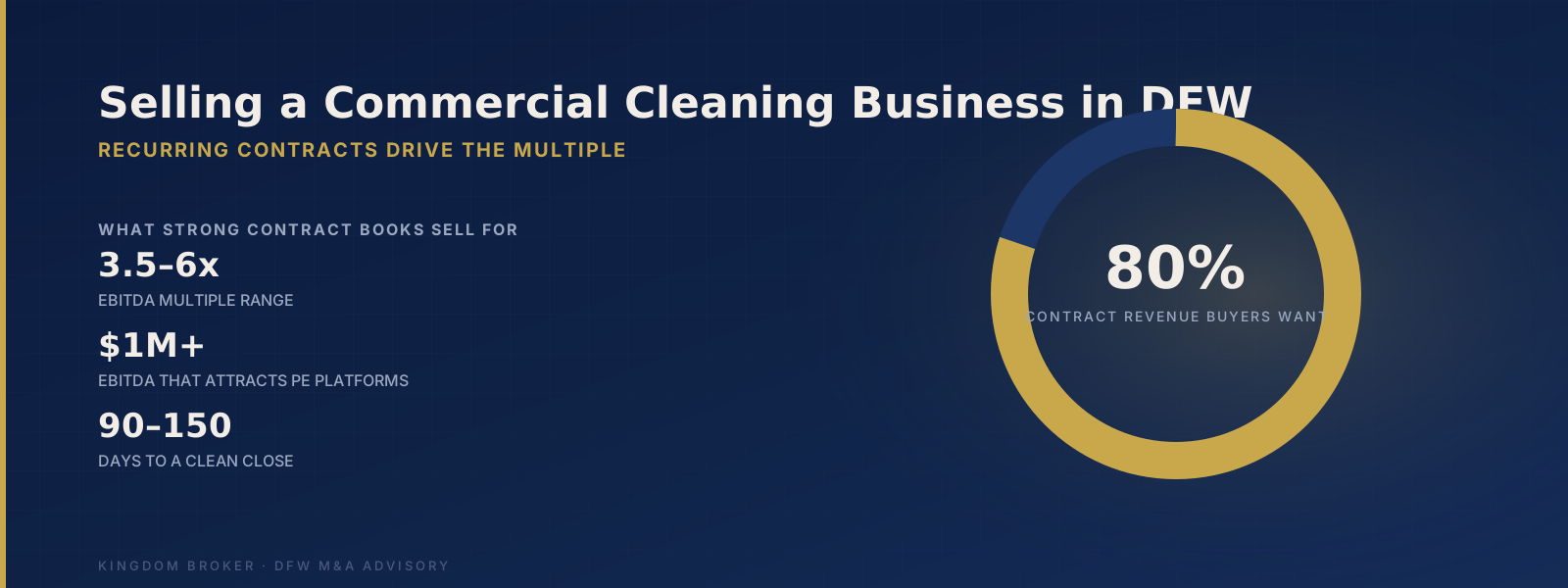
3.5–6x
EBITDA multiple range for contract-driven cleaning companies
80%+
recurring contract revenue buyers reward with a premium
$1M+
EBITDA that starts attracting private equity platforms
Notice the spread. The same revenue can be worth 2.5 times or 6 times depending on how the business is built. Before you do anything else, get a real estimate of your number with our free AI valuation tool. It takes five minutes and there is no login.
Why Recurring Contracts Decide Your Multiple
This is the whole game, so let me be blunt about it. A buyer pays for predictable cash flow. The more of your revenue that is locked under contract and renews on its own, the more the buyer will pay and the more of the price they will put down in cash at closing.
Think about two cleaning companies in Plano, both doing $2 million in revenue.
Company A cleans forty commercial buildings under multi-year contracts with automatic renewals. Company B chases one-off move-out cleans, post-construction jobs, and month-to-month accounts that the owner personally re-sells every few weeks.
Same revenue. Company A might sell for 5 times earnings. Company B might struggle to get 3. The difference is not the cleaning. It is the certainty that the revenue survives after the owner walks away.
"Nobody buys a cleaning company for the mops. They buy the promise that next month's invoices go out whether you show up or not."
This is the same principle that drives value in every recurring-revenue trade, from plumbing service agreements to pool routes. Contracted, sticky, transferable revenue is the closest thing a service business has to gold. If you want to raise your price, the fastest lever is converting loose accounts into signed, assignable contracts before you go to market.
Who Is Buying Commercial Cleaning Companies in DFW
Good news for owners: the buyer pool for janitorial and facility-services companies is deep right now, and Dallas-Fort Worth is one of the most active markets in the country. Three types of buyers will look at your business.
1. Private Equity Backed Platforms
Facility services is a favorite roll-up category for private equity. These groups buy a larger "platform" cleaning company and then bolt on smaller ones to build regional scale. If your EBITDA is north of roughly $1 million, expect these buyers to circle. They pay the strongest multiples, but they underwrite hard on contract quality and clean financials. Understanding what private equity firms look for before you talk to them is worth its weight in gold.
2. Regional Strategic Cleaning Companies
These are larger DFW and Texas cleaning operators who want your contracts, your crews, and your foothold in a submarket where they are thin. A strategic buyer can often pay up because they strip out duplicate overhead. Your back office becomes their margin.
3. SBA Owner-Operator Buyers
For smaller companies, an individual buyer using an SBA 7(a) loan is often the best fit. These are people leaving corporate careers who want to own a real business with real cash flow. Cleaning companies are a classic SBA target because the model is simple and the revenue is recurring.
The Point of a Real Process
You do not want just one of these buyers. You want all three competing at the same time. That is what a proper sell-side process does: it runs the PE platforms, the strategics, and the SBA buyers against each other so the market sets your price instead of one buyer setting it for you.
Five Value Drivers Buyers Pay Up For
When a buyer scores your commercial cleaning business, five things move the needle more than anything else.
📄
Contract Quality and Length
Multi-year contracts with auto-renewal and assignment clauses are worth far more than month-to-month handshakes. Get them in writing and make sure they transfer to a new owner.
⚠️
Customer Concentration
If one account is 30% or more of revenue, buyers get nervous and discount the price. Spreading revenue across many customers is one of the biggest levers you control. Here is why
concentration risk lowers value.
👷
Labor Stability
Cleaning is a people business. Low turnover, W-2 crews, supervisors who stay, and a real hiring pipeline tell a buyer the work gets done without drama after you leave.
📈
Margins and Pricing Discipline
Contracts with built-in annual price escalators and healthy gross margins signal a business that can pass through rising labor costs instead of eating them.
🔑
Owner Dependence
If you personally hold every customer relationship and do all the quality control, you are the business, and that scares buyers. Read how
owner dependency kills value.
🧾
Clean, Provable Books
Accrual financials, real add-back documentation, and no personal expenses buried in the P&L. Clean books let a buyer trust your earnings, which is the number they multiply.
Every one of these is fixable with lead time. The owners who get the best price are the ones who started tightening these levers a year or two before they wanted out.
What Drags the Price Down (and Scares Buyers Off)
I have watched good cleaning companies lose six figures of value, or lose the deal entirely, over problems that were avoidable. Watch for these.
- 1099 cleaners who should be W-2. Misclassifying staff as contractors is common in this industry and it is a landmine in due diligence. Buyers see back-tax and penalty exposure and either walk or slash the price.
- Cash and off-book revenue. Money you did not report is money the buyer will not pay you for. It also blows up your credibility on everything else in the file.
- Month-to-month, cancelable accounts. Revenue that any customer can end with thirty days' notice is treated as fragile. It caps your multiple.
- One giant client. A single account that carries the company is the fastest way to lose leverage at the table.
- You are the only salesperson and inspector. If nothing happens without you, the buyer is buying a job, not a business.
The theme is the same across all five: risk lowers price. Every one of these tells a buyer the earnings might not be real or might not last. Clean them up before you list, and consider a sell-side quality of earnings review so the numbers hold up under scrutiny.
How to Prepare Your Cleaning Business for a Clean Exit
Selling well is mostly about preparation. Give yourself six to twenty-four months and work this list.
- Get on clean accrual books. Separate personal expenses out, document your add-backs, and make your true earnings easy to see.
- Lock in your contracts. Convert loose accounts into signed multi-year agreements with renewal and assignment language. This one move can raise your multiple more than any other.
- Diversify the book. If any customer is over a quarter of revenue, go win new accounts to bring that share down.
- Build a layer between you and the work. Promote or hire supervisors who own the customer relationships and quality control so the business runs without you in every truck.
- Document how it runs. Written SOPs, route schedules, and a real org chart tell a buyer the machine keeps working after the keys change hands.
- Fix the labor classification. Get your W-2 versus 1099 house in order now, not during due diligence.
Do this work and you do not just get a higher price. You get a cleaner, faster close and a better shot at real cash at the table instead of a deal loaded with seller financing. For the full pre-sale playbook, see our guide on how to prepare your business for sale.
"You spent fifteen years building the contracts. Spend six months proving they will outlast you, and the market pays you for both."
Frequently Asked Questions
How much is my commercial cleaning business worth in Dallas-Fort Worth?
Most DFW commercial cleaning businesses sell for a multiple of normalized earnings. A small, owner-run company that lives on one-off jobs typically trades around 2.5 to 3.5 times SDE. An established janitorial company with recurring commercial contracts usually earns 3.5 to 5 times EBITDA, and larger platforms above roughly $1 million of EBITDA can reach 5 to 6 times or more. The biggest swing factor is how much of your revenue is under recurring contract. Run a free valuation to see where you land.
What multiple do janitorial companies sell for?
Contract-driven janitorial and commercial cleaning companies generally sell for 3.5 to 6 times EBITDA, while smaller owner-operated shops are valued on SDE at 2.5 to 3.5 times. Recurring monthly contracts, low customer concentration, stable W-2 crews, and clean books push you toward the top of the range.
Why do recurring contracts increase my sale price?
Buyers pay for predictable cash flow. A business built on multi-year contracts with automatic renewals gives a buyer confidence the revenue will still be there after you leave, so they pay a higher multiple and put more cash down. One-off jobs have to be re-won every month, which reads as risk.
Who buys commercial cleaning companies in Texas?
Three buyer pools: private equity backed facility-services platforms rolling up janitorial firms nationwide, regional strategic cleaning companies expanding in DFW, and individual owner-operators buying with SBA 7(a) loans. Larger, cleaner companies attract private equity; smaller ones attract SBA buyers. A good process runs all three at once.
How long does it take to sell a commercial cleaning business?
A well-prepared DFW commercial cleaning business usually takes about 90 to 150 days from market to close, plus a few weeks up front to organize financials and contracts. Clean books, documented assignable contracts, and a management layer beyond the owner all speed it up. Misclassified cleaners or heavy customer concentration can add months.
Your Next Step
Find Out What Your Cleaning Business Is Worth
You built the contracts. Now find out what the market will pay for them. Get a real estimate of your number in five minutes. No login required.
No cost. No obligation. Just clarity on your number.