Can I Sell My HVAC Business Without a Broker in Texas?
You've built a real business. Maybe $2M in revenue, a crew of eight, and more service calls than you can handle in the DFW summer heat. And now you're asking the obvious question: do I really need to pay a broker 10% to sell this thing?
That's a fair question. It's also one of the most expensive questions to answer wrong.
Here's the honest take, no spin, no scare tactics. Just the real math on what DIY costs you, where it actually works, and when bringing in a broker is the smarter financial move.
What "Selling Without a Broker" Actually Means
When an HVAC owner says they want to skip the broker, they usually mean one of three things. They want to avoid the commission. They think they already have a buyer lined up. Or they just don't know what a broker actually does.
All three are worth unpacking.
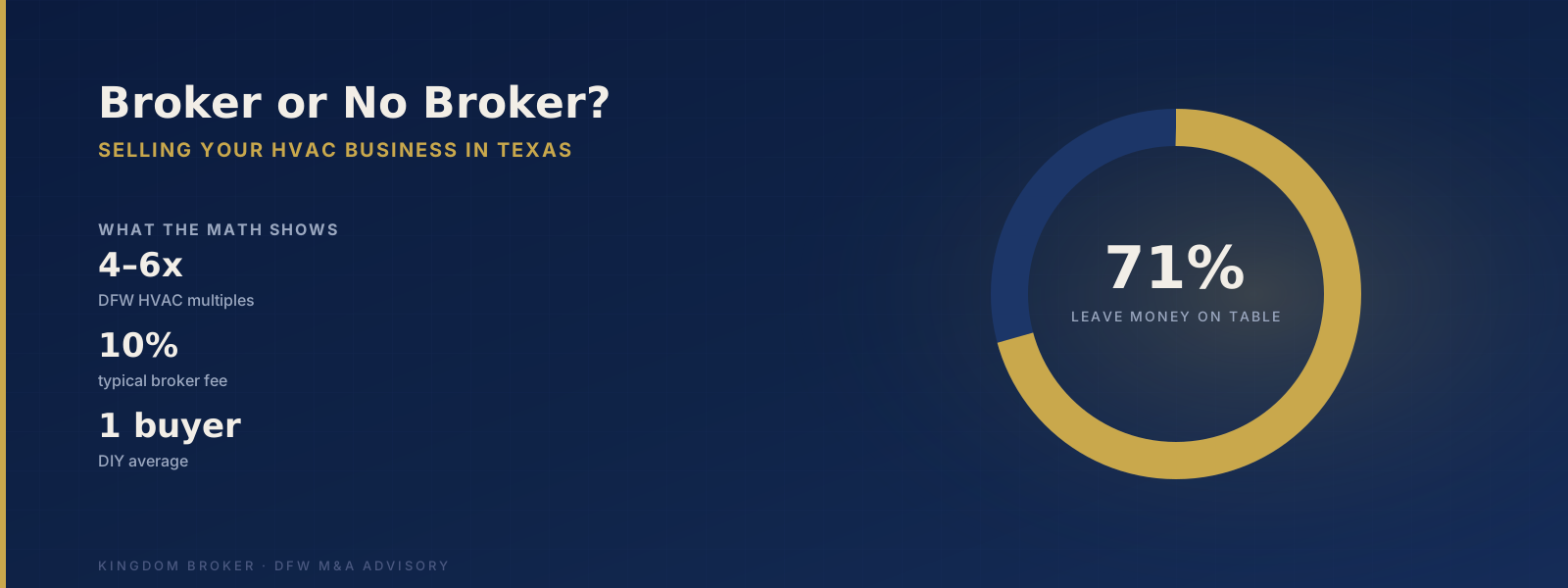
A broker commission on a lower-middle-market HVAC deal in Texas typically runs 8-12% of the sale price, with a minimum engagement fee that can range from $15,000 to $25,000 depending on the firm. On a $2.5M deal, you're looking at $200,000-$300,000 in fees. That number is real. It's also why sellers want to go around it.
But here's what the commission actually buys you: a confidential marketing process, a curated list of qualified buyers, competitive tension that drives price up, and someone who's done this thirty times while you've done it zero.
That last part matters more than most owners realize.
The Real Cost of Selling Your HVAC Business Solo in Texas
Let's say you go the DIY route. What actually happens?
You Start With One Buyer
Most HVAC owners who try to sell without a broker end up negotiating with one buyer, usually a competitor, a private equity-backed roll-up, or someone who reached out cold. One buyer means zero leverage. They know it. You're negotiating blind.
Private equity groups buying HVAC businesses in Texas are professional acquirers. They do this every quarter. They know exactly how to structure a letter of intent that looks generous and closes below asking. Without competitive offers on the table, you have no idea if you're getting fair market value or leaving $400,000 on the table.
The Valuation Problem
Most HVAC owners significantly misvalue their own businesses, in both directions. Some underprice because they don't know that DFW HVAC companies with strong recurring maintenance contracts are trading at 4x-6x EBITDA right now. Others overprice because they're anchored to revenue instead of profit, or they've added back expenses a buyer won't accept.
If you haven't read about what add-backs actually count when selling a business, that's the first place to start. Getting this wrong tanks deals, or worse, it closes deals at the wrong number.
Confidentiality Breaks Down Fast
The moment you start telling people your HVAC business is for sale, the market knows. Employees get nervous and start looking. Customers wonder if service quality will change. Competitors use it against you in bids. A properly run broker process keeps everything under NDA until qualified buyers are vetted, something that's genuinely hard to replicate on your own.
Due Diligence Is a Full-Time Job
Once you have a buyer, you still have to get through due diligence. That means producing three years of financials, tax returns, customer lists, equipment schedules, technician certifications, subcontractor agreements, and more. If you're still running service calls while managing that process, something breaks, usually the deal.
See our full due diligence checklist for selling a business to understand the scope of what buyers actually request.
When Selling Without a Broker Can Work
To be straight with you: there are scenarios where skipping a broker makes sense.
- You have a pre-existing buyer, a long-time employee, a family member, or a business partner who wants to buy you out, and the price is already essentially agreed upon.
- Your deal is under $500K in total value. At that size, broker economics get murky and a good transaction attorney plus a CPA may be sufficient.
- You're doing an internal ownership transition, not a third-party sale.
Outside of those scenarios? The math usually doesn't favor going solo on a $1M-$10M HVAC deal in Texas.
What a Broker Actually Does on an HVAC Deal in DFW
There's a version of this conversation where a broker just lists your business on BizBuySell and waits. That's not what quality M&A advisory looks like. Here's what the process should include for a DFW HVAC business in the $2M-$10M range.
First, a proper valuation, not a back-of-napkin multiple, but a real analysis of your EBITDA, add-backs, customer concentration, and what comparable HVAC deals are trading at in Texas right now. If you want a head start, our HVAC business valuation guide walks through exactly how buyers think about pricing.
Second, a confidential information memorandum that presents your business the way a buyer wants to see it, growth story, route density, technician quality, maintenance contract revenue, and market position in DFW's still-expanding suburbs like Celina, Prosper, and Anna.
Third, a targeted outreach to qualified buyers. That means financial buyers, strategic acquirers, and HVAC roll-up platforms actively deploying capital in North Texas, not just whoever happens to search BizBuySell this week.
Fourth, negotiation support through LOI, due diligence, and close. This is where deals die. A good advisor keeps them alive.
The comparison isn't broker fees vs. zero. It's broker fees vs. a lower sale price, a longer timeline, and a higher probability the deal falls apart completely.
The DFW HVAC Market in 2026: Why Timing Matters Here
North Texas is one of the hottest markets for HVAC acquisitions in the country right now. New home construction in Frisco, McKinney, Forney, and Mansfield keeps demand high. Private equity-backed platforms are actively buying to build density. Strategic buyers, regional HVAC companies looking to grow through acquisition, are competing with PE for quality deals.
That competition is leverage. But only if you run a process that surfaces it.
An owner who sells quietly to the first buyer who calls misses the opportunity entirely. 2026 is still a strong seller's market for well-run HVAC businesses, but that window doesn't stay open forever, and it only pays off if you position the business correctly from the start.
The Owner-Dependency Problem (It's More Common Than You Think)
One more thing worth naming directly. The biggest value killer in DFW HVAC sales isn't the broker question, it's owner dependency. If you're the one holding all the customer relationships, doing all the estimates, and managing every technician personally, buyers will discount your multiple significantly.
A strong service manager, documented processes, and recurring maintenance revenue turn a 3x deal into a 5x deal. That's the kind of prep work that pays for itself many times over, regardless of whether you eventually use a broker or not.
The Honest Bottom Line
Yes, you can sell your HVAC business without a broker in Texas. Plenty of owners do. Some of them get a fair deal. Most leave money on the table, and some never close at all.
The question isn't really whether you can go solo. It's whether the savings on commission are worth the risk of a lower price, a longer timeline, and a messier process, while you're still trying to run a business.
For most HVAC owners in the $1M-$15M range, the answer is no. But you deserve to make that call with real numbers in hand.
Start by knowing what your business is actually worth. Use our free HVAC business valuation tool to get a realistic range before you talk to anyone, broker or buyer.
Find Out What Your HVAC Business Is Worth First
Before you decide broker or no broker, know your number. Get a free, no-obligation valuation built for DFW HVAC businesses.
Get Your Free Valuation