What Is the Average Sale Price of a Roofing Company in Texas?
You built a roofing company in Texas. You chased hail storms across the Metroplex. You hired crews when everyone else was struggling to find labor. You fought insurance adjusters, managed subcontractors, and kept your numbers moving in the right direction.
Now you're wondering what it's all worth.
That's a fair question. And the answer is more nuanced than most brokers will tell you upfront. Let's get into the real numbers.
The Honest Answer: A Wide Range
Roofing companies in Texas sell anywhere from 2.5x to 5.5x EBITDA, depending on size, revenue mix, owner dependency, and market conditions. On a revenue basis, which some buyers still use for smaller deals, that translates to roughly 0.3x to 0.7x annual revenue.
For context, if your roofing company generates $4M in revenue and $600K in adjusted EBITDA, a buyer might offer anywhere from $1.5M to $3.3M depending on how clean your books look and how much the business can survive without you.
That's a wide spread. And every dollar in that spread has a reason behind it.
Why Roofing Valuations Are Trickier Than Other Trades
Roofing has a complexity that HVAC and plumbing don't: storm-year volatility.
If a major hail event rolled through Collin County or Tarrant County the year before you list your business, your revenue might look exceptional, and temporarily inflated. Buyers know this. They will normalize your financials, often averaging three years of EBITDA and discounting the storm spike.
The same dynamic works in reverse. If 2024 was a quiet storm year and your numbers dipped, a skilled advisor can reframe that to buyers by showing the trailing three-year average and what normalized performance looks like.
This is exactly why understanding add-backs and normalization matters so much in roofing deals. Storm revenue, one-time material windfalls, and insurance restoration spikes all need to be disclosed and explained, not hidden and hoped for.
The Insurance Restoration Question
Buyers, especially private equity groups, pay close attention to your revenue mix. Specifically, what percentage of your work is insurance-driven restoration versus retail replacement and new construction?
Here's the honest breakdown of how buyers read that mix:
- Heavy insurance restoration (70%+): Buyers see this as cyclical and storm-dependent. They'll discount the multiple unless you have demonstrated systems, storm-chasing infrastructure, and consistent year-over-year performance across multiple storm seasons.
- Balanced mix (40-60% insurance, remainder retail/commercial): This is the sweet spot. It shows you're not one-trick and that revenue persists even in quiet weather years.
- Retail and commercial dominant: Buyers love this. Predictable. Recurring commercial maintenance contracts and strong residential replacement volume earn the highest multiples.
If your business skews heavily toward insurance restoration, that doesn't mean you can't sell well, it means you need to frame it correctly and pair it with documented processes that show a buyer how the storm-chasing machine actually works.
Deal Size Drives the Multiple More Than Anything Else
This is the part most owners don't hear until they're already in a deal process.
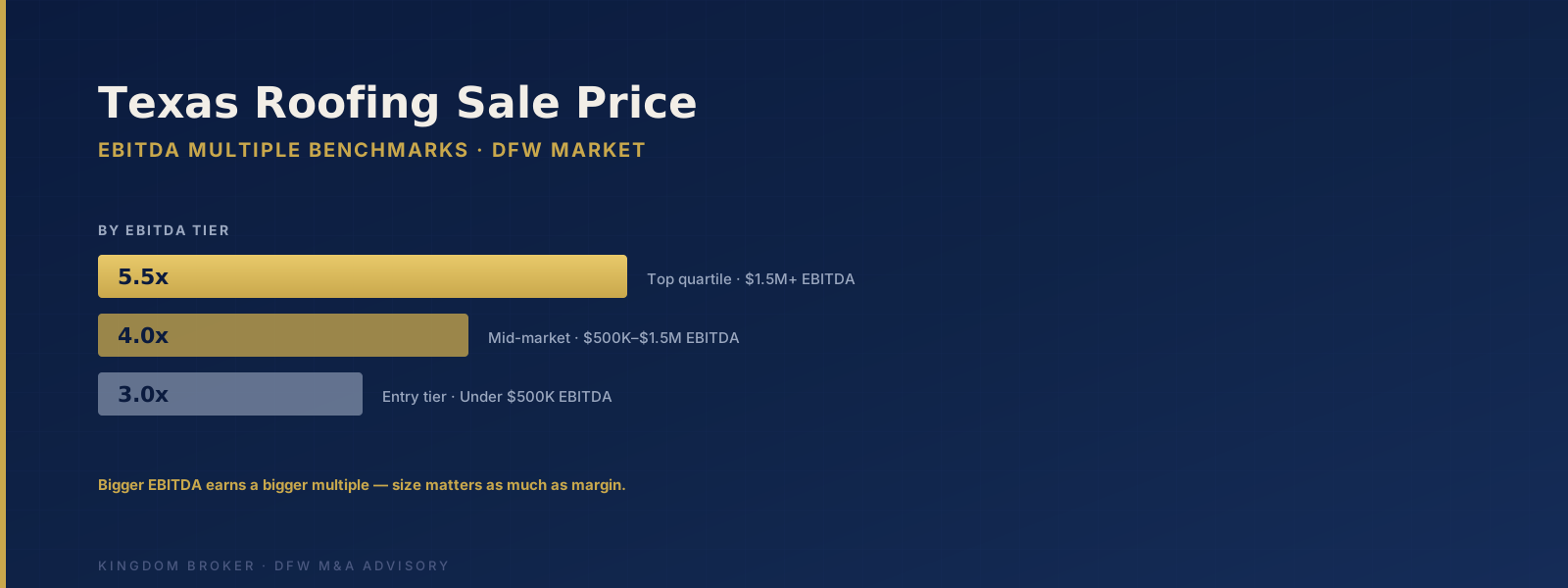
The multiple a buyer will pay is heavily influenced by the absolute size of your EBITDA, not just the quality of it. A roofing business doing $200K in EBITDA will trade at a lower multiple than one doing $1.2M, even if the smaller one has better margins. That's just how lower-middle-market deals work in Texas.
Here's the rough tiering you'll see in the DFW market right now:
- Under $500K EBITDA: 2.5x-3.5x. SBA-financed deals, mostly individual owner-operators buying in. Buyers need the business to cash-flow their debt service starting day one.
- $500K-$1.5M EBITDA: 3.5x-4.5x. Mix of SBA and conventional financing. PE-backed platforms begin sniffing around. Management team and scalability matter here.
- $1.5M+ EBITDA: 4.5x-5.5x (and occasionally higher). PE groups, strategic buyers, and family offices compete. Clean QoE, diversified revenue, and a management team that doesn't depend on you unlocks the top of the range.
If you want to understand how buyers build their offer logic, this breakdown of what PE firms look for will help you think like the other side of the table.
The Factors That Move You Up the Range
Getting from 3x to 5x isn't magic. It's execution on the things buyers actually care about.
Owner independence. If you're the one on the roof, handling every insurance adjuster call, and writing every estimate, buyers will price that risk in hard. Owner dependency is one of the biggest value killers in any trade business. The fix isn't overnight, but it starts with building a general manager layer that holds up without you.
Clean, consistent financials. Three years of tax returns that match your P&Ls. Clear EBITDA that a buyer can verify. This sounds basic, but most roofing companies in the $2M-$8M revenue range have messy books. Clean ones stand out fast.
Customer concentration. If 40% of your revenue comes from one insurance carrier relationship or one commercial property manager, buyers will discount. Concentration risk is real in roofing, and diversification, even documented effort toward it, changes the conversation.
Documented systems and a real crew. Buyers are buying a business, not buying you. Show them that your estimating process, crew scheduling, materials procurement, and QC inspection systems exist in writing, and that your foremen can execute without constant oversight.
What the Due Diligence Process Looks Like in Texas
Once you accept an offer, you're typically 60-120 days from closing. For a roofing company, due diligence will include a Quality of Earnings report for any deal over $1M, a review of your subcontractor agreements, insurance certificates, warranty obligations, and licensing.
Texas doesn't require a roofing contractor license at the state level, but many municipalities in DFW do. Buyers will verify your local licensing and your liability and workers' comp coverage carefully. Gaps here can kill a deal or crater your price late in the process.
If you want a thorough walkthrough of what buyers will ask for, our due diligence checklist for business sellers is a good place to start building your document folder now, before you're under LOI and scrambling.
DFW Is One of the Best Markets in the Country to Sell a Roofing Company Right Now
The Metroplex adds roughly 150,000 people per year. New rooftops. Aging rooftops. Storms that don't care about your calendar. The demand side of roofing in North Texas isn't going anywhere.
Buyers, both individual operators looking to acquire and PE-backed platforms consolidating the trades, are actively looking for roofing companies in the $2M-$15M revenue range right now. The deal flow is real. The buyers are capitalized. And the window to capture strong multiples is open.
That window doesn't stay open indefinitely. Interest rate movement, insurance market tightening, and shifts in buyer appetite all affect timing. If you're curious about whether 2026 is the right year to move, we've written about that specifically.
So What's Your Roofing Company Actually Worth?
You won't know until you run the numbers with someone who knows the DFW market and has closed roofing deals, not just listed them.
A back-of-envelope estimate is a starting point. A real valuation, one that accounts for your storm-year revenue, your owner role, your crew structure, and your local market position, is what you need before you make any decisions.
Get your free business valuation from Kingdom Broker and find out where you actually stand before you walk into a buyer conversation unprepared.
Find Out What Your Roofing Company Is Worth
Get a no-cost, no-pressure valuation built on real DFW roofing deal data, not generic formulas.
Get Your Free Valuation