How to Sell a Pest Control Business in Dallas-Fort Worth
You built it route by route. One yard sign, one referral, one quarterly contract at a time. Now the trucks run themselves, the techs know their stops, and you're wondering what happens if you cash out.
Here's the good news. Pest control is one of the most sought-after businesses in the country right now. Buyers love it. And if you sell a pest control business in Dallas-Fort Worth the right way, you can walk away with a number that surprises you.
But "the right way" matters. The difference between a rushed sale and a well-run process is often six figures or more. Let's walk through it.
Why Buyers Love Pest Control Businesses
Most service businesses live and die on the next job. Pest control is different. It's built on a foundation that buyers dream about: recurring revenue.
Think about what you've created. Quarterly service plans. Monthly commercial accounts. Termite renewals. Mosquito programs that come back every spring. That income doesn't depend on a salesperson hustling for the next deal. It shows up whether you're at the office or on a beach in Galveston.
That predictability is exactly what private equity firms and strategic acquirers pay a premium for. A pest control business is, in many ways, a subscription business wearing work boots. And subscription economics command higher multiples than one-time revenue ever will.
There's a second reason buyers circle this industry. It's recession-resistant. Roaches don't care about interest rates. Termites don't read the news. Demand stays steady through good years and bad, which makes the cash flow even more bankable.
What Is a Pest Control Business Worth in DFW?
This is the question every owner asks first. The honest answer: it depends on how your revenue is built.
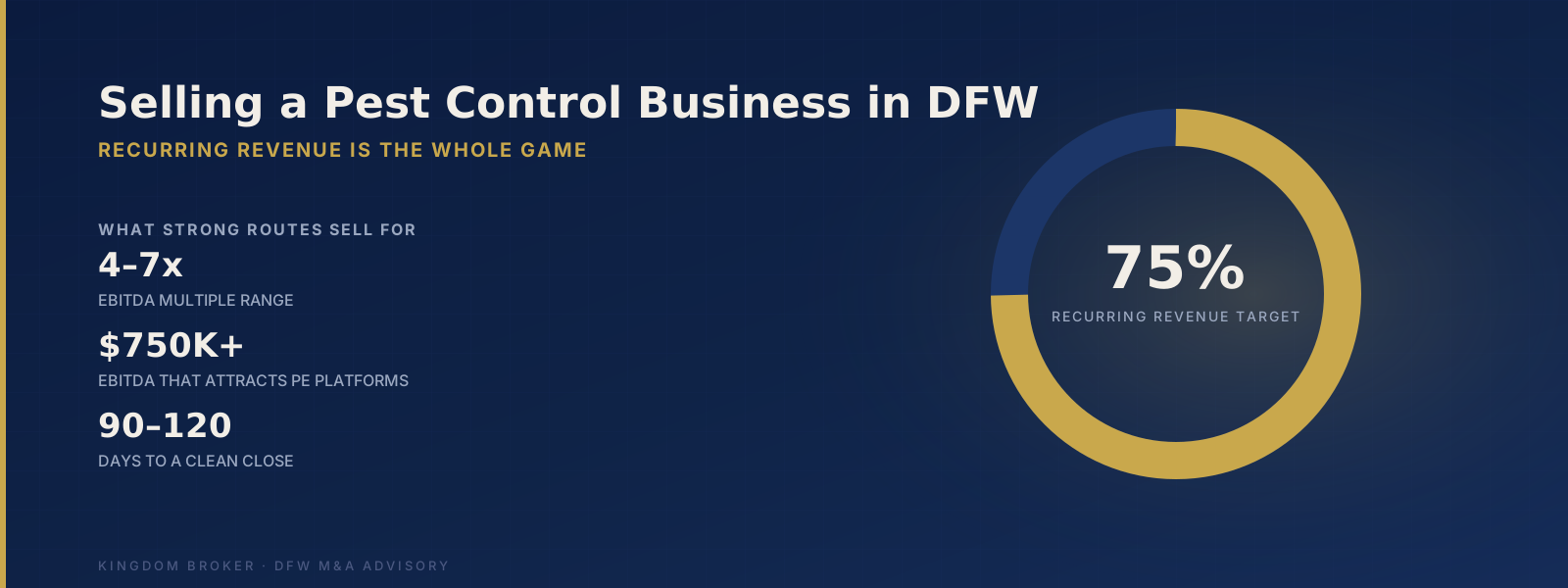
In the current DFW market, owner-operated pest control companies under $1.5M in revenue typically trade in a range of 3x to 4.5x Seller's Discretionary Earnings (SDE). Once you cross into real scale, call it $750K and up in EBITDA, institutional buyers enter the picture, and multiples climb into 5x to 7x EBITDA territory. Clean, route-dense platforms with heavy recurring revenue can push even higher.
A pest control business with 75% recurring revenue is worth far more than one at the same revenue level living on one-time treatments. Buyers underwrite the contract base, not the busy season.
If you want a real number before you talk to anyone, start with a free valuation. Get a figure you can plan around, then make decisions from knowledge instead of guesswork.
The Levers That Push Your Pest Control Valuation Higher
Your multiple isn't fixed. The same business can sell for very different numbers depending on a handful of factors. Here's what buyers reward:
- High recurring revenue. The more of your income that comes from contracts, the better. Aim to highlight every quarterly, monthly, and annual renewal you have.
- Route density. Twenty stops in one Plano neighborhood are worth more than twenty stops scattered across four counties. Density means lower drive time and fatter margins.
- Low customer concentration. One commercial account at 30% of revenue scares buyers. Read why customer concentration risk can quietly cap your price.
- A team that runs without you. If you're still answering the phone, dispatching trucks, and closing every sale, the business is really just a job. Owner dependency is the number-one value killer in this industry.
- Clean financials. Separated personal expenses, documented add-backs, and software that tracks every account. Buyers pay for confidence.
The encouraging part: most of these are fixable before you go to market. A focused year of cleaning up the books, shifting one-time customers onto service plans, and building a manager who can run the schedule can add a full turn to your multiple. On a business doing $1M in EBITDA, that's a million dollars of extra value.
Who Actually Buys DFW Pest Control Companies?
Knowing your buyer pool changes how you run the process. There are three groups hunting in Texas right now.
Private equity roll-up platforms
This is the loudest money in the room. National and regional platforms are buying pest control routes across the Southwest and stitching them into larger companies. They pay strong multiples for recurring revenue and want businesses with $750K-plus in EBITDA. If that's you, these are the buyers who write the biggest checks. It's worth understanding what private equity firms look for before you ever talk to one.
Regional strategic operators
Established pest control companies expanding their DFW footprint. They already know the business, so due diligence moves fast. They're often willing to pay up for routes that fill a geographic gap or add commercial accounts they don't have.
Individual owner-operators
First-time buyers, often using SBA 7(a) financing, looking to buy themselves a business. They're typically the right fit for smaller, owner-run companies. They may not pay the top multiple, but they close, and they often care about your team and your name.
The DFW advantage is real.
Dallas-Fort Worth is one of the fastest-growing metros in the country. New rooftops mean new customers. Hot, humid summers mean year-round pest pressure. That combination has buyers paying close attention to Texas pest control businesses, and competition between buyers is what drives your price up.
Don't Forget the Texas License
One detail trips up owners who try to sell on their own. Commercial pest control in Texas operates under licensing regulated by the Texas Department of Agriculture, including a certified applicator and a business license.
If you're the certified applicator and you plan to walk away, the buyer has a problem on day one. They need a licensed applicator in place, either on staff or arranged before closing, or the business can't legally operate.
This isn't a deal-killer when it's handled early. It is a crisis when it surfaces in the middle of due diligence. A broker who knows this industry flags it on the first call and builds the license transition into the deal structure before it becomes a fire.
How to Run a Sale That Actually Gets Top Dollar
Listing your business on a website and waiting for emails is not a strategy. It's a hope. Here's what a real process looks like.
- Get your number first. Know what the business is worth and what's dragging it down before you go to market.
- Clean up for the next twelve months. Shift customers to contracts, separate personal expenses, document everything.
- Build a confidential information memorandum. Tell the story of your recurring revenue, route density, and team, the things buyers actually pay for. Here's what a CIM is and why it matters.
- Create competition. Bring multiple qualified buyers to the table at once. One conversation gives away your leverage. Several conversations create a bidding dynamic.
- Negotiate structure, not just price. Earnouts, seller financing, and equity rollovers can dramatically change what actually lands in your pocket after tax.
That's the difference between selling a pest control business in Dallas-Fort Worth and selling it well. The work you put in before going to market is where the real money is made.
Start From a Position of Strength
You spent years building something durable. A business with steady cash flow, loyal customers, and a name people trust in their own neighborhoods. Don't hand it off in a hurry to the first buyer who calls.
Know your number. Fix what's fixable. Bring the right buyers to the table. Do that, and the value you've built over all those years finally shows up where it belongs, in your bank account, and in the legacy you pass on.
Find Out What Your Pest Control Business Is Worth
Get a free, no-pressure valuation built on real DFW comps, before you talk to any broker, including us.
Get Your Free Valuation