How Much Is My Pool Service Business Worth in Texas?
You've spent years building your pool route. Early mornings. Scorching Texas summers. Chemicals, pumps, filters, and customers who text you on Christmas Eve because their water turned green.
At some point — whether that's now or three years from now — you're going to want to know what all of it is actually worth.
The honest answer? Somewhere between 2.5x and 5x your annual EBITDA, depending on a handful of factors that buyers care about deeply. Let's break down exactly how pool service businesses are valued in Texas, what makes the multiple go up, and what quietly kills it.
What Buyers Are Actually Buying
When a strategic buyer or private equity-backed roll-up acquires a pool service company in DFW, they aren't buying your trucks or your test kits. They're buying your recurring monthly revenue — the contracted maintenance agreements that show up like clockwork every 28 days.
That predictability is gold to buyers. It reduces risk. It makes financing easier. And it makes your business look a lot more like an annuity than a job-to-job operation.
Pool service sits in a genuinely attractive corner of the home services market. Texas has one of the highest concentrations of residential pools in the country — Tarrant County alone has hundreds of thousands of in-ground pools, and Dallas keeps adding them. Demand is not going anywhere. That tailwind lifts every boat in the space, including yours.
The Two Ways Pool Companies Get Valued
1. Revenue-Based (Route Multiples)
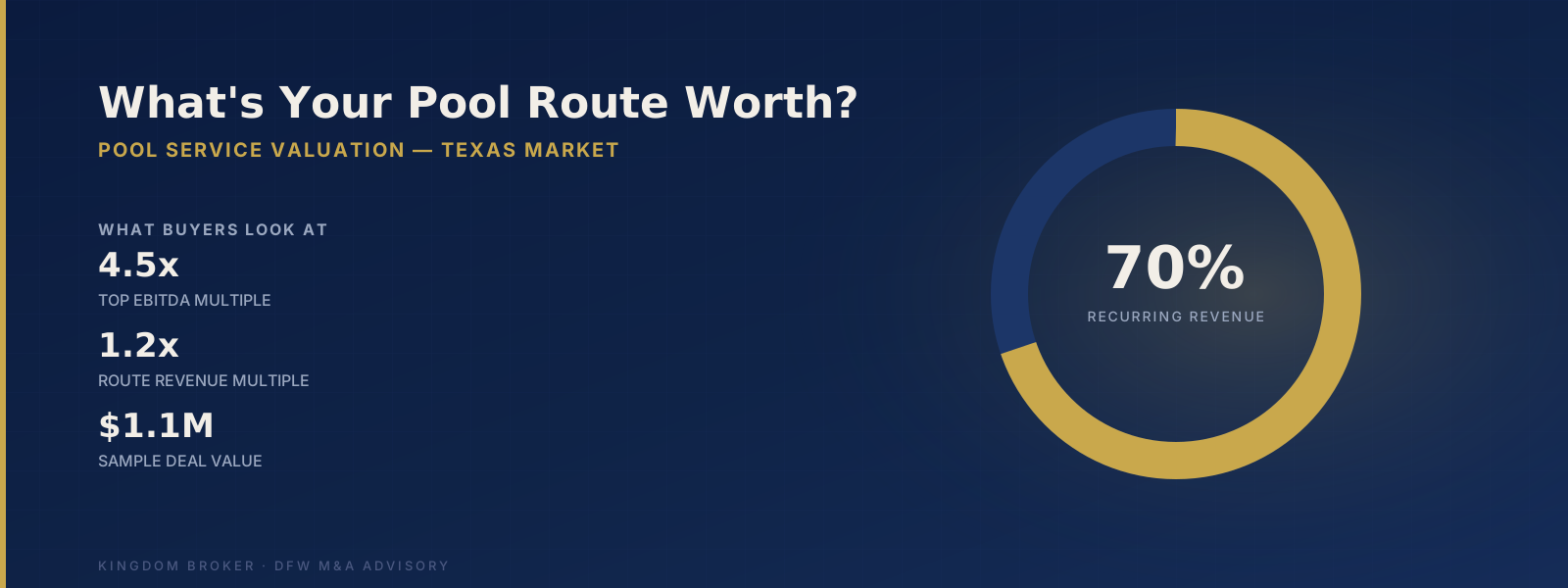
Smaller pool route businesses — especially those under $500K in annual revenue — often get valued on a simple revenue multiple. Buyers in Texas are currently paying 0.9x to 1.4x annual route revenue for clean, well-documented residential maintenance routes.
So if your route generates $300,000 per year in recurring maintenance revenue, you're looking at a rough value of $270,000 to $420,000 on the route alone, before adding equipment sales, repairs, or remodels.
Route multiples compress fast when churn is high, when the routes are spread across three counties, or when half your customers are on verbal agreements instead of signed contracts.
2. EBITDA-Based (Larger Operators)
Once you're generating $750,000 or more in annual EBITDA, buyers shift to EBITDA multiples — and the math gets more favorable. In today's Texas market, pool service companies at this size are trading at 3x to 5x EBITDA.
The difference between 3x and 5x isn't random. It comes down to a few specific things:
- Percentage of revenue that's recurring and contracted
- Owner dependency — can the business run without you showing up? (Read more about how owner dependency kills value.)
- Customer concentration — does one HOA or property manager account for 30%+ of your revenue? (See our breakdown of customer concentration risk.)
- Quality and cleanliness of your financials
- Number of technicians and whether they're W-2 or 1099
What Pushes a Pool Company to 5x
If you want the top of the range, you need to look like a business — not a route.
Contracted revenue matters most. Buyers want to see signed, transferable service agreements. If 80% or more of your monthly revenue is under contract, you're starting the conversation strong.
A management layer helps enormously. If you have a lead tech or operations manager who runs daily logistics and you're not the one showing up to every pool, your multiple climbs. Buyers aren't looking to buy themselves a new job — they want to buy cash flow.
Clean books.** Three years of tax returns that actually match your QuickBooks. Clear separation between business and personal expenses. A well-documented add-back schedule that a buyer can verify. This alone separates the 4x sellers from the 3x sellers.
Geographic density. A route where your trucks service 60 pools in a 5-mile radius of Frisco is more valuable than 60 pools spread from Weatherford to Rockwall. Tight routes mean lower labor costs and more stops per day — buyers price that in.
What Quietly Kills the Multiple
This is the part most sellers don't want to hear. But ignoring it is expensive.
Verbal agreements. If your customers stay out of loyalty to you personally — and you have nothing in writing — buyers discount that revenue heavily. They can't guarantee it transfers.
Repair-heavy revenue. Repairs and remodels are great cash, but they're lumpy and unpredictable. Buyers pay premium for maintenance, not for revenue that only shows up when a pump fails.
High employee turnover. The labor market in DFW is competitive. If you're cycling through technicians every season, buyers see a training cost and a service quality risk.
Deferred equipment maintenance. Trucks with 200,000 miles and a shop full of aging equipment aren't just an operational headache — they're a negotiating chip buyers will use to reduce your price or load the deal with earnout conditions.
Texas-Specific Market Dynamics Right Now
DFW is one of the most active markets in the country for home services M&A. Private equity-backed platforms are actively consolidating pool companies across North Texas, and they have capital to deploy. That competition among buyers is working in sellers' favor right now.
At the same time, SBA lending for pool route acquisitions remains active — buyers are still able to finance deals with SBA 7(a) loans in Texas, which keeps the buyer pool wide and deal structures accessible.
If you're thinking about timing, understand that pool companies tend to show best on paper in Q1 and Q2, when revenue is ramping into peak season. Entering a sale process in late winter gives you a full season of strong financials to present. Our breakdown of the best time to sell a business in 2026 goes deeper on that.
A Simple Back-of-the-Napkin Valuation
Here's rough math for a DFW pool service company in today's market:
- Annual maintenance revenue: $800,000
- Add repair and equipment: $250,000
- Total revenue: $1,050,000
- Owner EBITDA (after add-backs): ~$280,000
- At 4x multiple: $1,120,000 enterprise value
That's a real number. Not a dream. Not a worst case. A reasonable expectation for a clean, well-run pool service business with documented recurring revenue in the DFW market right now.
The difference between getting $900,000 and $1,300,000 for a business like that isn't luck. It's preparation. It's knowing what buyers care about before you go to market. It's having an advisor who represents you — not the buyer.
If you want to know where your specific business sits, the first step is a real valuation — not a guess. Get your free pool service business valuation here and we'll tell you the truth about what your route is worth in today's Texas market.
You can also read our broader guide on how to prepare your business for sale if you're 12 to 24 months out and want to start building value now.
Find Out What Your Pool Business Is Worth
Get a free, no-obligation valuation from a Texas M&A advisor who specializes in home services — and find out exactly where your route stands in today's market.
Get Your Free Valuation