How Long Does It Take to Sell a Pool Service Business?
You've built a book of routes. Maybe 150 accounts. Maybe 400. You've got technicians who actually show up, a truck fleet that runs, and a DFW market that never stops growing because nobody here wants to clean their own pool in August.
Now you're thinking about selling. The first question most owners ask isn't "how much will I get?", it's "how long is this going to take?"
That's the right question. Because time is leverage, and if you don't understand the timeline, you can't control it.
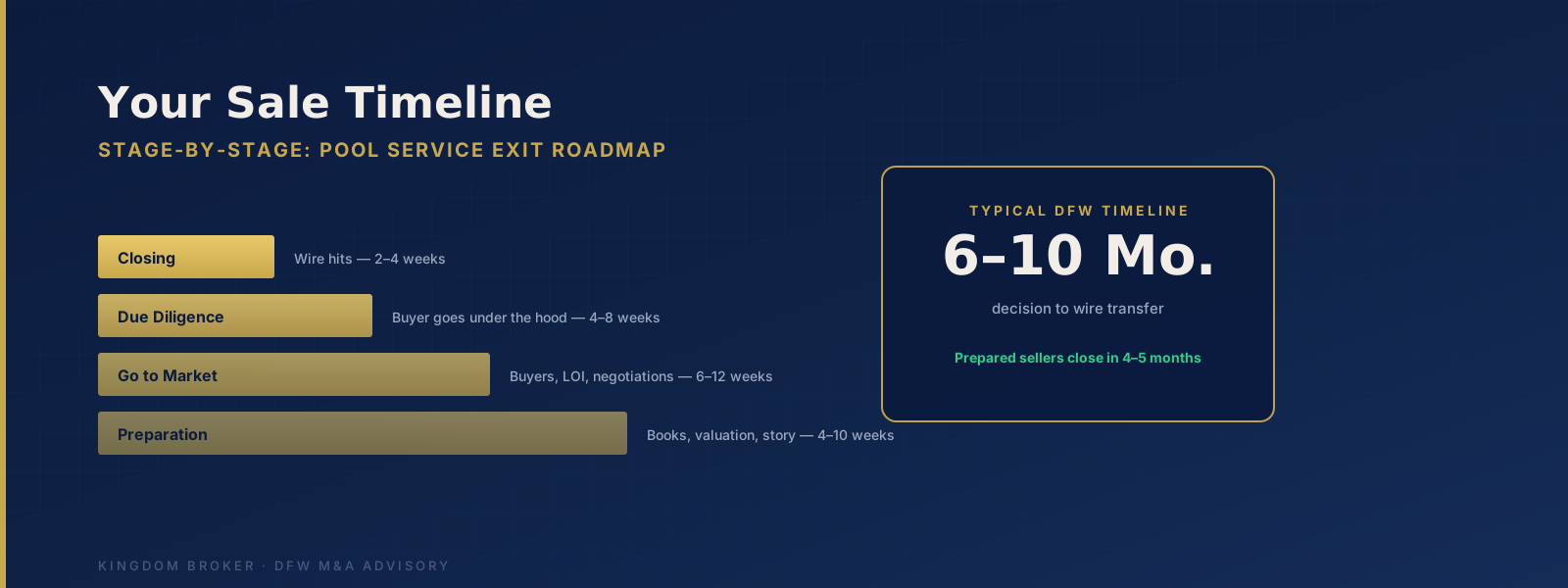
Here's the honest answer: most pool service businesses in the Dallas Fort Worth market take six to ten months from the decision to sell to the wire hitting your account. Some close faster. Some drag past a year. The difference usually isn't luck, it's preparation and deal structure.
Let's walk through it stage by stage.
Stage 1: Pre-Market Preparation (4-10 Weeks)
This is the part most owners skip, and then regret.
Before you show your business to a single buyer, you need clean financials, a clear picture of what your company is actually worth, and a story that holds up under scrutiny. Pool service businesses are often run lean, with a lot of personal expenses running through the P&L. That's not a crime, but it needs to be documented and explained as add-backs before you go to market, not discovered by a buyer's CPA during due diligence.
What eats time in Stage 1:
- Pulling three years of clean tax returns and P&Ls
- Building a normalized EBITDA schedule
- Documenting your route list (accounts, service frequency, monthly recurring revenue)
- Getting a formal business valuation
- Addressing owner dependency, who runs things if you step away?
That last one matters more than most owners realize. If every customer relationship runs through you personally, buyers discount the price and extend their due diligence timeline. Read more about how owner dependency kills business value before you assume you're ready to go to market.
Do Stage 1 right and you'll save weeks on the back end. Rush it and you'll lose deals that were 90% closed.
Stage 2: Going to Market and Finding Buyers (6-12 Weeks)
Once your Confidential Information Memorandum (CIM) is ready, you're officially in the market. Your broker starts outreach, strategic buyers, private equity-backed platforms, independent operators looking to acquire routes.
The DFW pool service market is competitive right now, and that's working in sellers' favor. The population growth in Frisco, Prosper, Celina, and the southern suburbs means buyer demand for established route businesses is real. You're not begging for attention. You're filtering for quality.
Expect to get serious inquiries from 3-8 qualified buyers. You'll have initial conversations, share your CIM under NDA, and start fielding Letters of Intent. If your business is well-prepared and priced accurately, you can have a signed LOI in hand within 8 weeks of going to market. If your pricing is aggressive or your financials raise questions, expect that window to stretch.
One thing that accelerates this stage: a business with monthly recurring revenue. Pool service is one of the most attractive recurring-revenue models in the home services space. A clean book of 200+ residential accounts on autopay is a very different conversation than a business that re-bids everything quarterly.
Stage 3: Due Diligence (4-8 Weeks)
You've signed an LOI. The buyer has agreed on price and structure. Now they go under the hood.
Due diligence on a pool service business typically covers:
- Financial verification, tax returns, bank statements, QuickBooks reconciliation
- Customer list review, churn rates, account tenure, concentration risk
- Equipment and vehicle condition
- Employee and technician agreements
- Licensing, chemical handling compliance, and insurance
- Any lease agreements on yard space or warehouse
If you're selling to a buyer using an SBA loan, which is common in this deal size range, the lender adds their own layer of diligence. SBA 7(a) loans in Texas typically add 3-6 weeks to the process versus an all-cash deal.
Customer concentration is a common slowdown here. If 30% of your revenue comes from one HOA contract or one property management company, buyers get nervous and lenders get more nervous. Understand your concentration risk before it surprises you in diligence.
The deals that blow up in Stage 3 almost always blow up because of something the seller knew about but didn't disclose. Don't be that seller. Surprises in diligence kill trust, and trust is the deal.
Stage 4: Closing (2-4 Weeks)
Once diligence clears, you move to final documents. Purchase agreement, bill of sale, non-compete, transition services agreement. If there's real estate involved, that adds complexity. If it's purely an asset sale, which most pool service transactions are, this stage moves relatively fast.
Closing on an asset sale for a pool service business typically takes 10-20 business days from the end of diligence. Your attorney and the buyer's attorney negotiate final language. You sign. The wire moves.
Total elapsed time from "I want to sell" to cash in hand: six to ten months for most DFW deals. Best-case scenario with a prepared seller and a cash buyer: four months. Worst case with a distracted seller and an SBA deal that re-trades: fourteen months or more.
What Speeds the Process Up
The sellers who close fast share a few things in common. They have three years of clean books. They've already documented their routes, their customer churn, their technician structure. They've thought about the preparation process before a buyer showed up and asked hard questions.
They also understand that deal structure affects timeline. A seller willing to carry a note, even a small one, gives buyers and lenders more confidence. Seller financing, even 10-15% of the deal, can shave weeks off closing because it signals that you believe in the business you're selling.
What Slows the Process Down
Every week of delay costs you something, momentum, buyer interest, and occasionally the deal itself. The biggest timeline killers in pool service transactions are:
- Messy or incomplete financials that require reconstruction
- Owner who is the business, no manager, no systems, no documented processes
- Overpriced listings that sit and go stale
- Customer list that can't be verified or has high churn
- SBA appraisal coming in below purchase price
- Seller getting cold feet and going silent mid-diligence
The cold feet problem is real and underappreciated. Selling a business you've built is emotionally hard. If you're not genuinely ready to hand over the keys, buyers sense it, and the process drags.
The Right Time to Start the Clock
Here's the thing about timing: the best time to start preparing is 12-18 months before you want to close. Not because the process takes that long, it doesn't. But because the preparation period is when you can actually increase the value you're selling.
Fix the owner dependency. Clean up the books. Add one more technician who can run routes without you. Lower customer churn by 5%. Each of those moves could add $50,000-$150,000 to your exit price on a $500K EBITDA business at a 4x multiple.
The market timing question matters too. DFW's continued population growth and the consolidation happening in pool service right now are tailwinds. They won't last forever.
If you want to know what your pool service business is actually worth today, and what the realistic timeline looks like for your specific situation, start with a free valuation from Kingdom Broker. No pressure, no obligation. Just the truth about where you stand.
Find Out What Your Pool Business Is Worth
Get a free, no-pressure valuation from Kingdom Broker and see exactly where you stand before you make any moves.
Get Your Free Valuation